
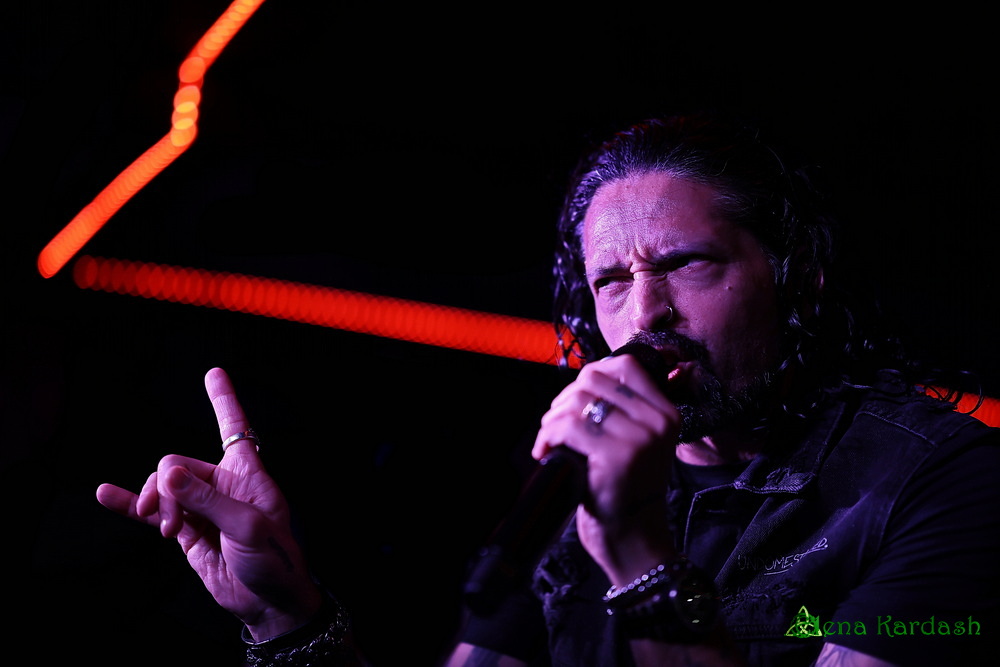
Mucho antes de que se marcara la apertura oficial de las aduanas de la sala, el asfalto exterior de Zaragoza ya vibraba con esa tensión eléctrica que solo las grandes citas rinden al circuito. El ambiente bullía en una marea de conversaciones cruzadas donde el hilo conductor era el rugido sónico que se avecinaba y la gestión logística del cambio de sala anunciado unos días antes; un imprevisto que, lejos de enfriar los ánimos, inyectó un extra de expectación y urgencia carnal entre los asistentes. La acera se convirtió en el termómetro exacto de la velada, con una primera fila inquebrantable que aguantaba con parsimonia el denso calor de la tarde con un único objetivo: presenciar la descarga de las bandas más esperadas de la noche, la maquinaria de Iron Savior y el magnetismo internacional de Ronnie Romero. El punto de inflexión térmico se desató en los exteriores cuando los miembros de Alacrán cruzaron el umbral de salida tras concluir sus pruebas de sonido técnicas en la tarima. En ese instante, la multitud se volcó por completo al plano, rodeándolos de inmediato en una compacta escolta de público, seguidores y amistades de toda la vida que destiló una corriente densa de orgullo local y apoyo incondicional.
Al cruzarse por fin el umbral de acceso, el interior de La Casa del Loco deparó la primera gran victoria logística de la jornada: una atmósfera notablemente fresca y aclimatada que actuó como un alivio inmediato para los asistentes que venían de soportar las altas temperaturas del exterior. Este descenso térmico reajustó los ánimos del público al milisegundo plano, transformando el sofoco acumulado en una energía renovada y electrizante. Con la mirada fija en el escenario, el público se agolpó con un entusiasmo desbordante en las primeras líneas, conteniendo la respiración ante los preparativos iniciales de las tablas, listos para entregarse por completo a la inminente descarga instrumental.
ALACRÁN
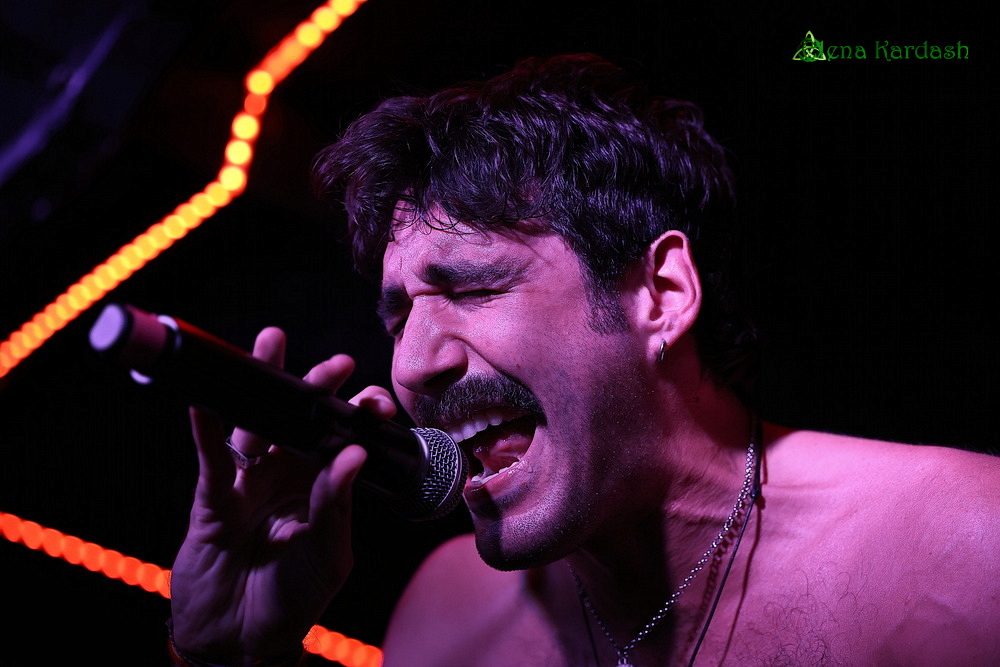
La mecha la prendió Rafa Basa en sus funciones de DJ; la leyenda del periodismo estatal se apoderó del micrófono destilando una cercanía, un humor y una complicidad arrolladora que encendieron de inmediato el perímetro de la sala para presentar formalmente la rabia emergente de los locales Alacrán. Formados originalmente en el año 2012 en las entrañas de la escena aragonesa con una propuesta firmemente anclada en el Heavy Metal clásico de corte ochentero, la agrupación demostró sobre las tablas por qué se ha consolidado como una de las formaciones más compactas y tenaces del norte peninsular. Con un sonido directo, crudo y sin aditivos, la banda defendió su reputación en el circuito subterráneo a base de kilómetros, riffs de alta tensión y una lírica combativa cantada en castellano, rescatando la herencia del metal de cuero y remaches como un relevo generacional indispensable.
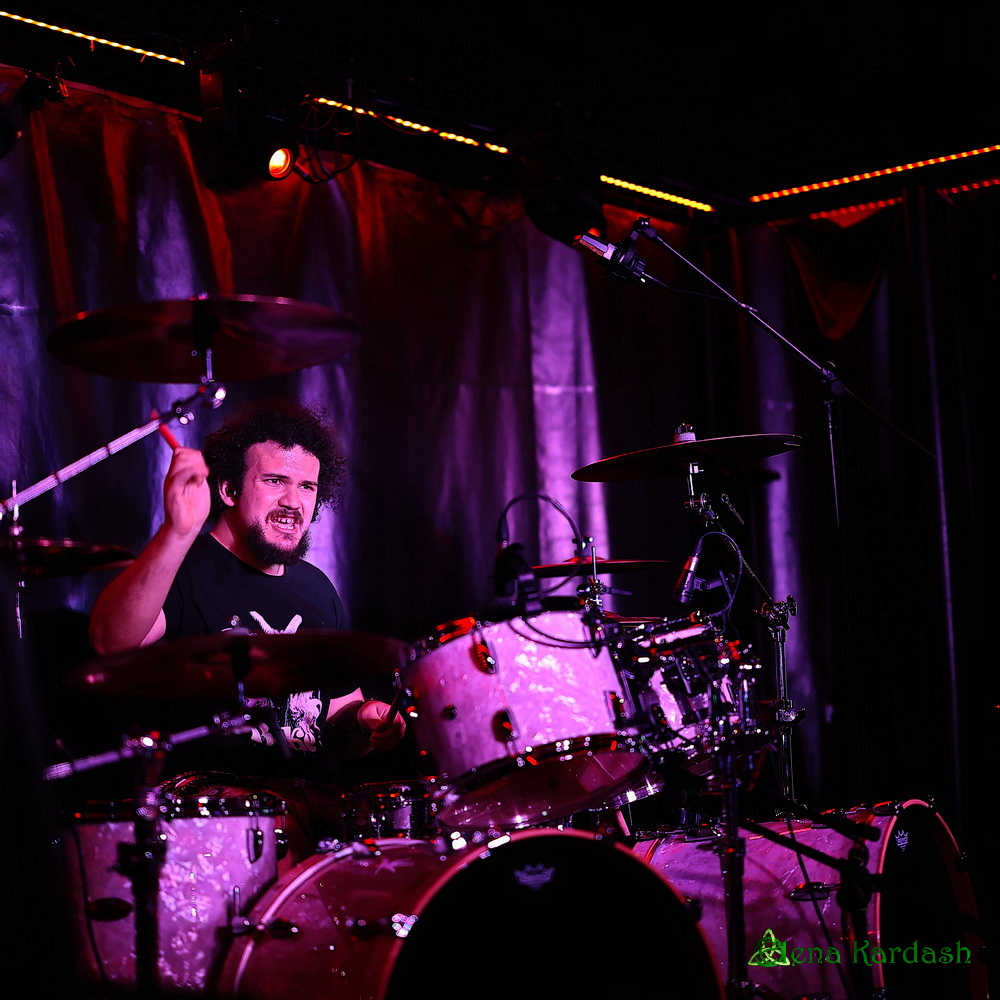
Sobre el escenario, la descarga desplegó una fuerza rítmica compacta y demoledora que no dio un solo milisegundo de tregua. La actuación estuvo comandada por la actitud salvaje y pasional de Sergio “Cachorro” a la voz, cuyo registro desgarrado conectaba directamente con las vísceras de la primera fila, perfectamente respaldado por el cortafuegos de Christian “Oli” dictando cátedra en las seis cuerdas, el pulso estanco de Diego “Petroski” amarrando las frecuencias graves desde el bajo y la pegada crujiente de Roberto “RK” Monforte dinamitando la batería desde el fondo de la tarima. El repertorio se desplegó como una ráfaga continua donde los asistentes, completamente magnetizados por la intensidad carnal del show, respondían con un rugido colectivo ante el impacto de “Luzifer” y la fuerza de “Volver a nacer”.
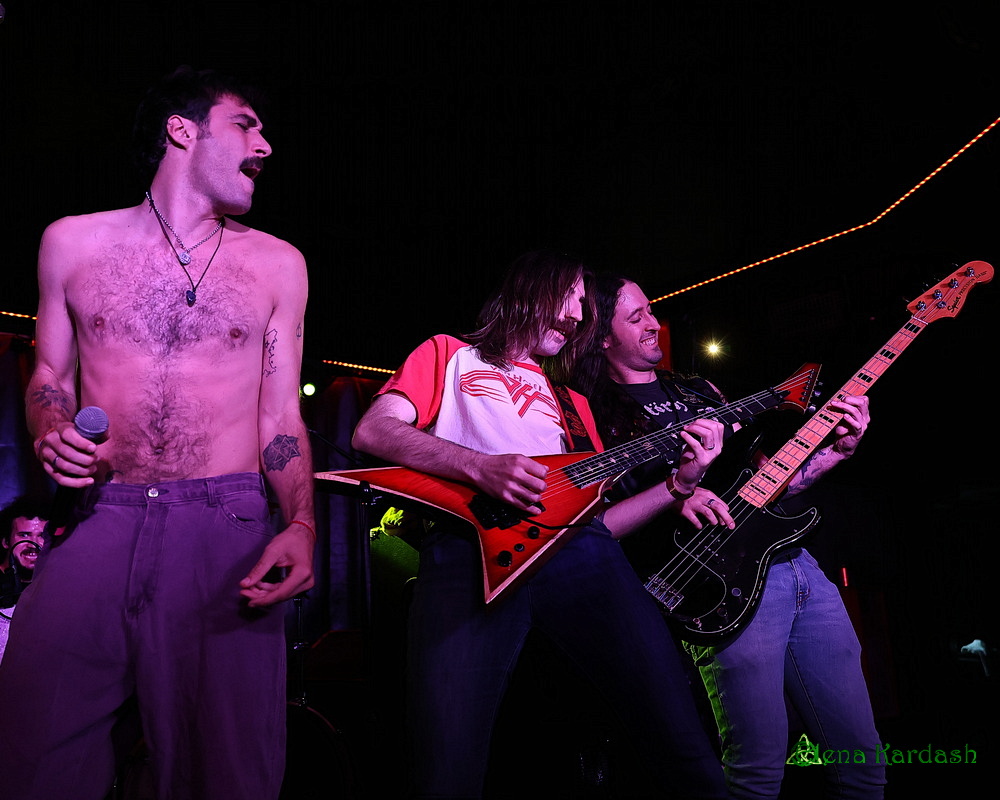
Cada solo y cada golpe rítmico encendían el perímetro, hilvanando la entrega de la sala con composiciones directas como “Tenemos que salir” y la complicidad de “No me digas que no lo ves”. La tensión y el nervio real alcanzaron el clímax absoluto con la descarga de “Halcones de la noche” y la velocidad indestructible de “Síndrome”, transformando el espacio en un hervidero que dejó el ambiente perfectamente revolucionado antes del siguiente asalto de la jornada.
IRON SAVIOR
Tras el gran cierre de la banda local, el ambiente de transición pasó a estar gobernado de nuevo por la curaduría musical de Rafa Basa en las funciones de DJ. El momento de mayor conexión en este intermedio llegó con la reproducción del inmortal himno de Primal Fear, “Metal is Forever”; un sartenazo sónico de absoluto voltaje que propició una de las reacciones más singulares al ser coreado de forma espontánea por el propio batería de Iron Savior, Patrick Klose, mientras realizaba con una sonrisa de disfrute los ajustes técnicos en su set al fondo de la tarima trasera. La estampa definitiva de esta antesala se consolidó sobre las tablas cuando el propio Piet Sielck saltó a escena para fundirse en un abrazo con el locutor; un instante de pura hermandad del acero donde compartieron una carcajada cómplice cara a cara, reflejando el señorío y el respeto mutuo que otorgan tres décadas en la primera línea del circuito antes de dar paso al estallido del grupo.
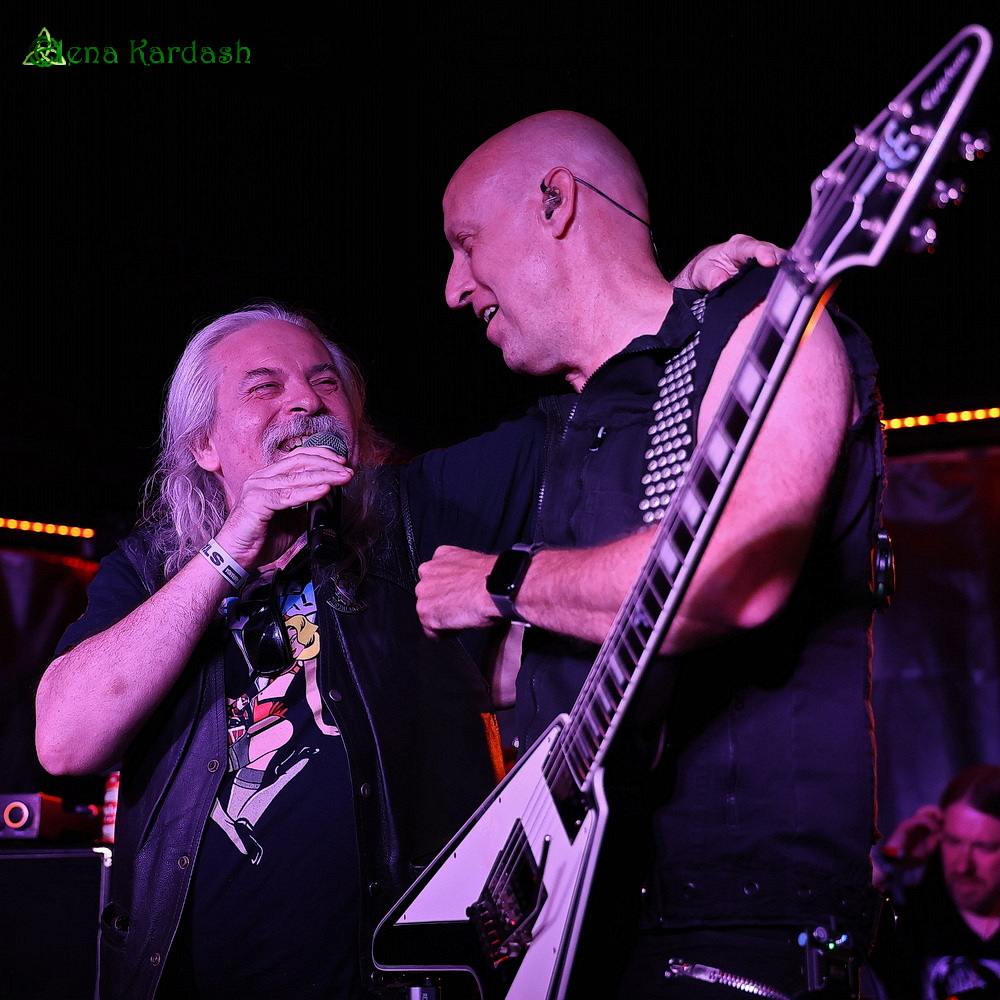
Fue entonces cuando el relevo logístico fue asumido formalmente por la maquinaria pesada de Hamburgo. Fundados en 1996 por el legendario guitarrista, productor e ingeniero de sonido Piet Sielck junto a Kai Hansen y Thomen Stauch, Iron Savior es un pilar fundamental e indestructible del Power Metal teutón. Nacidos bajo un concepto de ciencia ficción que narra la saga de una nave nodriza con inteligencia artificial, la agrupación se ha mantenido fiel durante tres décadas a un sonido blindado.
En directo, la formación alineó un bloque compacto que desplegó una destreza técnica milimétrica miembro a miembro, conquistando a una audiencia entregadísima que coreaba de forma apasionada cada letra y cada estrofa de las canciones.
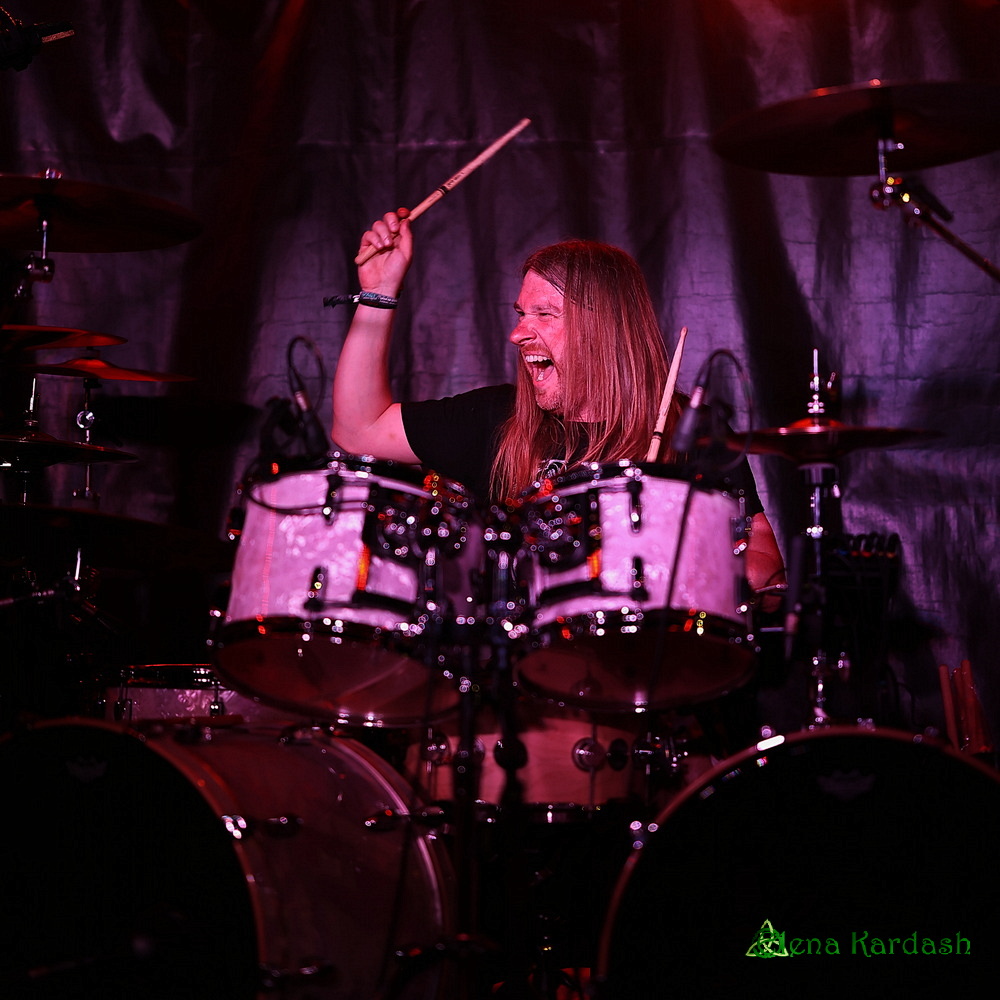
Al frente de la nave, Piet Sielck dictó una cátedra de solera a los mandos de su guitarra y su imponente registro vocal; su técnica de púa exhibió una contundencia de roca, ejecutando un palm-muting denso y estanco que amarró los cimientos rítmicos mientras modulaba su característica voz rasgada de barítono, abriendo fuego con la fuerza directa de “Way of the Blade” y desatando una oleada de energía colectiva con el impacto de “Roaring Thunder”. A su lado, el cortafuegos indestructible de Joachim “Piesel” Küstner en la guitarra gemela demostró un señorío interpretativo supremo, recorriendo los trastes con una sincronía dactilar asombrosa y una nitidez clínica en los solos neoclásicos que electrizaba a la primera fila, completamente magnetizada ante composiciones de la talla de “Starlight” y el voltaje denso de “Souleater”.

La retaguardia rítmica funcionó con la precisión de un engranaje cronométrico teutón, haciendo rugir a los asistentes al compás de “In the Realm of Heavy Metal”, el empuje de “Hall of the Heroes” y la melodía hímnica de “Never Stop Believing”. El bajista Patrick Opitz aportó un blindaje estanco a las cuatro cuerdas, desatando un pulso denso, líquido y pesado que no se limitó a seguir la tónica, sino que empujó las frecuencias graves mediante una técnica de púa agresiva y una cadencia sólida que amarró la melodía bajo un control absoluto, mientras el público se volcaba por completo coreando las líneas de “Together as One”. Gobernando el directo desde el fondo del escenario, la pegada demoledora del batería Patrick Klose fue el motor de alta tensión del show; su técnica de doble bombo, su velocidad mecánica y una subdivisión implacable en los contratiempos mantuvieron las revoluciones de la banda al milisegundo plano, calibrando el caudal de vatios con una parsimonia y limpieza estructural encomiables.

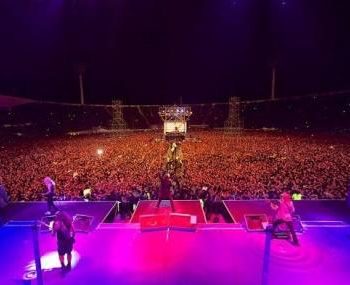
El punto álgido de la comunión entre el escenario y la sala se desató justo antes de encarar uno de sus himnos definitivos. Desde el público, una mano extendió un papelito directo a las manos de Piet Sielck; el líder de Hamburgo lo tomó, detuvo el plano y leyó en voz alta el título escrito: “Heavy Metal Never Dies”, desatando el clamor instantáneo de los asistentes ante la inminencia del clásico. Acto seguido, con un dinamismo majestuoso, Sielck dividió la sala por completo en dos flancos – izquierda y derecha – espoleando una competición de puro voltaje para ver qué lado rugía con más fuerza el estribillo de la composición.La respuesta del perímetro fue un trueno demoledor de gargantas entregadas al límite que transformó el espacio en un hervidero de alta tensión colectiva. El tramo final de la descarga mantuvo las revoluciones al límite mediante la nitidez salvaje de “Condition Red” y el colofón destructivo de “Atlantis Falling”, dejando las tablas completamente encendidas y al público revolucionado ante el desenlace de la noche.
RONNIE ROMERO
Con el ambiente completamente encendido tras el encuentro teutón, el intermedio de transición se rompió cuando Rafa Basa tomó de nuevo el micrófono para presentar formalmente a Ronnie Romero bajo el herraje de “el cantante chileno”, desatando el clamor definitivo de una audiencia lista para el asalto final. El tramo final de la jornada en La Casa del Loco llegó con la descarga solista de Romero. Pocas trayectorias en el siglo XXI han alcanzado el impacto internacional del vocalista, cuya irrupción se produjo al ser seleccionado personalmente por Ritchie Blackmore para liderar el regreso de Rainbow, catapultando su voz a las primeras líneas de la industria global junto a proyectos de primer nivel como el Michael Schenker Group, CoreLeoni, Elegant Weapons o Gotus, además de su participación en la destacada formación española Delalma y su alianza con el virtuoso guitarrista Gus G.
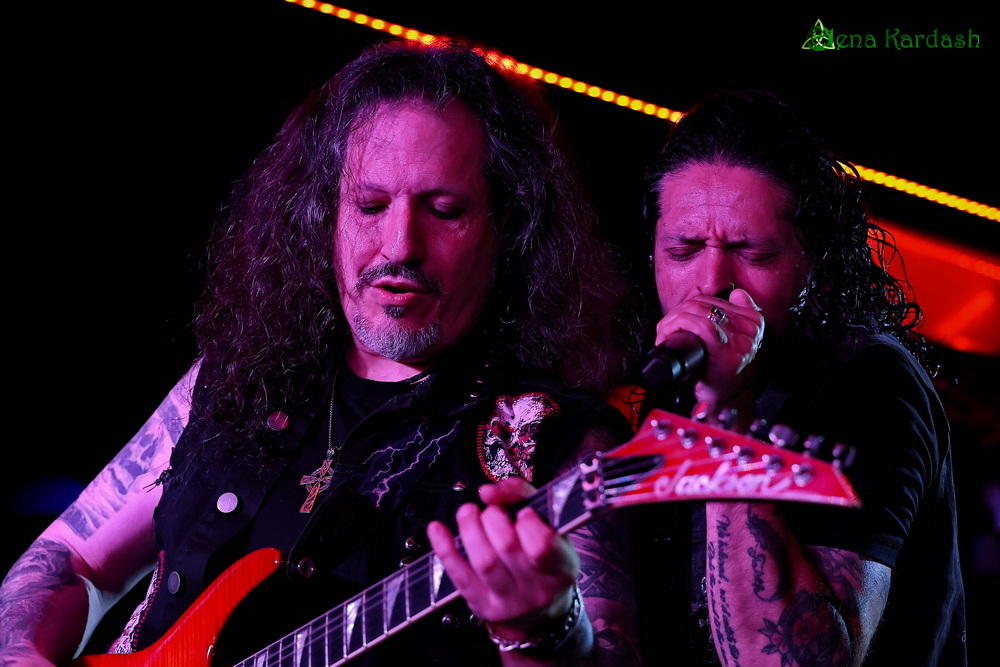
Pero más allá de los galones internacionales, lo que de verdad reventó los plomos de la noche fue esa absoluta disponibilidad, esa complicidad cruda y esa energía magnética que se respiraba a ras de suelo. Ronnie Romero no es un artista dócil que se esconde detrás del equipo de seguridad; es un torbellino que busca el contacto visual, que interactúa con la primera fila con una naturalidad pasional que desarma y que sabe perfectamente cómo encender el perímetro de la sala mediante una comunicación fluida y directa que hace partícipe a cada asistente de la intensidad del directo. Al frente de la armada instrumental, la complicidad se palpaba al milisegundo plano en cada mirada y en cada nota, enlazando voluntades ante el impacto de “Backbone”, el voltaje de “Never Felt This Way”, la fuerza de “Eternally” y la crudeza de “Stand Up and Shout”.
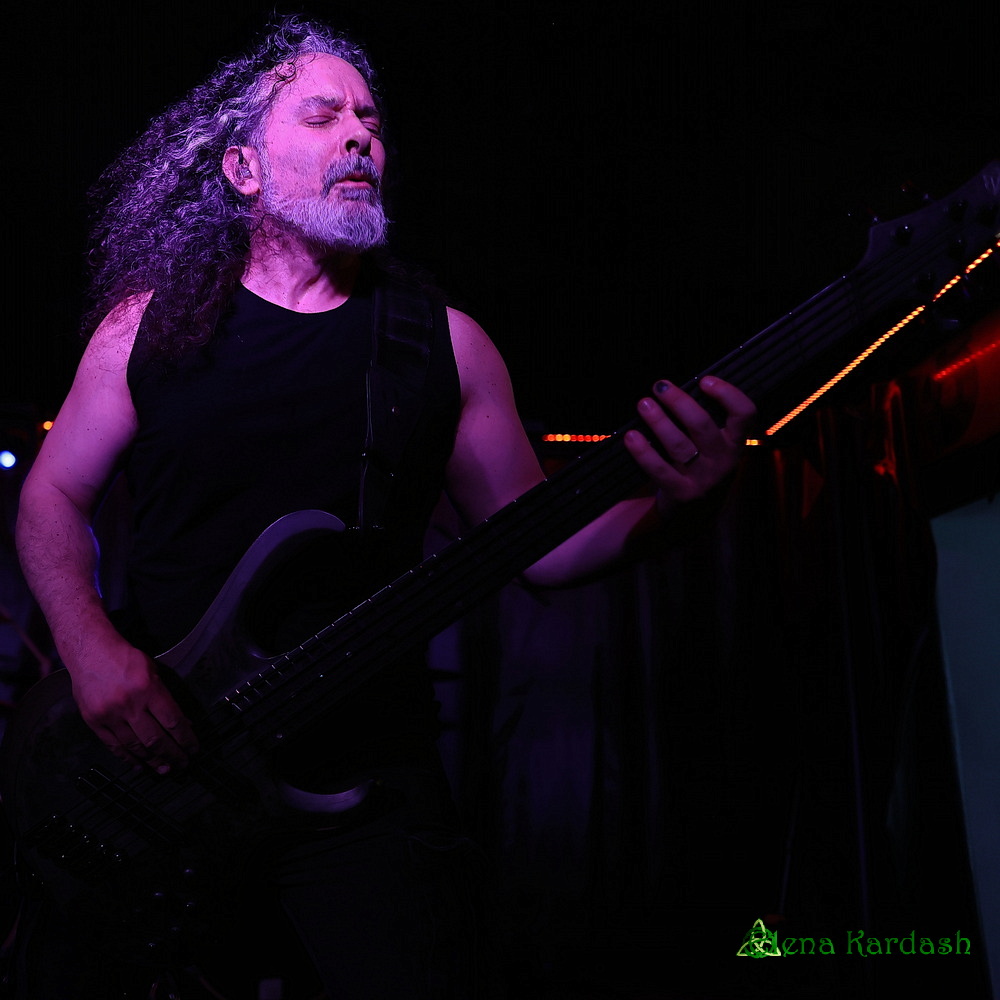
La descarga desplegó una fuerza colectiva descomunal miembro a miembro, haciendo reaccionar a los asistentes al milisegundo ante la traca de “Bring the Rock”, “Lost in Time” y la intensidad de “Chased by Shadows”. La batería de Chris Allan fue un trueno constante desde el fondo de la tarima trasera, marcando el ritmo con una pegada demoledora que empujaba las revoluciones del grupo al límite, manteniendo una precisión quirúrgica en los acentos y una subdivisión implacable, perfectamente coordinada con el bajo denso, estanco y líquido de Andy Arcangeli. El músico italiano aportó un blindaje de alta escuela a las cinco cuerdas, desatando un pulso pesado que amarró las frecuencias graves bajo un control absoluto.
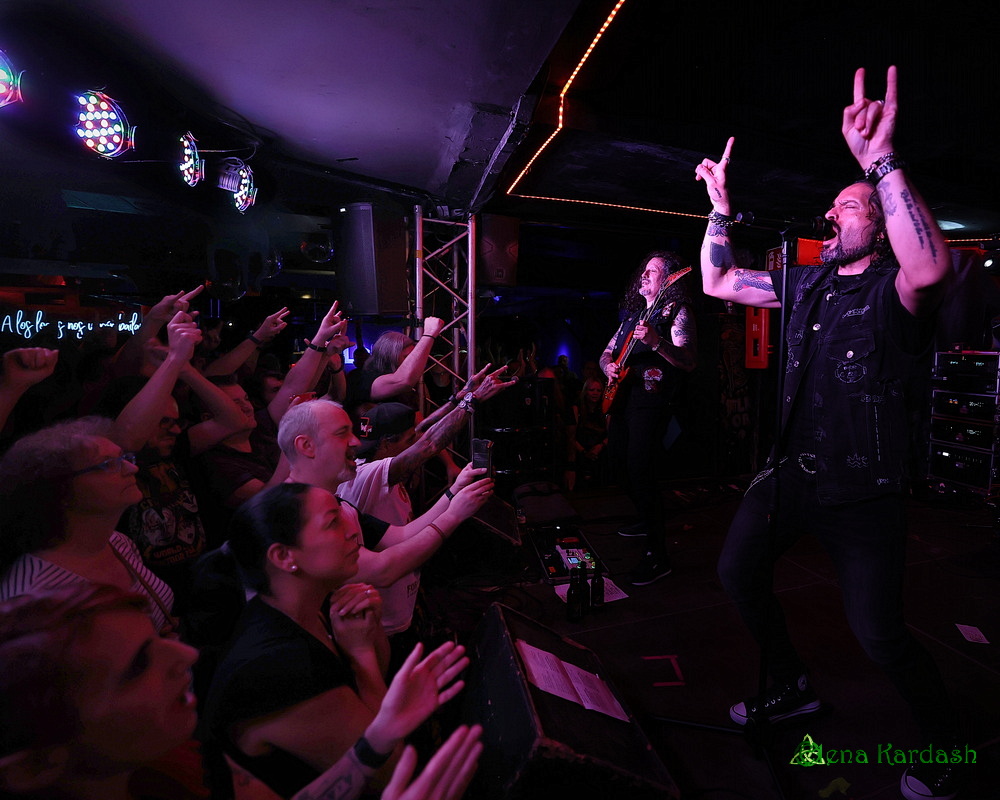
El momento de máxima solemnidad llegó con la monumental obra maestra de Rainbow, “Stargazer”. Con una actitud imponente y conteniendo el pulso de la sala, Ronnie Romero presentó este hito rindiendo un explícito agradecimiento eterno a Ritchie Blackmore, remarcando ante una audiencia entregadísima que Rainbow sigue siendo su banda predilecta y “Rising” su álbum de cabecera. La escudería abordó la extensión de la composición bajo una precisión matemática absoluta y un virtuosismo implacable, destilando una intensidad carnal que envolvió por completo el perímetro de La Casa del Loco, mientras la primera fila, completamente magnetizada por la majestuosidad de la interpretación, coreaba de forma apasionada cada línea antes de encarar el empuje de “Keep on Falling” y la nitidez de “Hideaway”.

Y gobernando el flanco melódico, las seis cuerdas de José Rubio dictaron una auténtica cátedra de virtuosismo y solera. El hacha destiló una destreza técnica impecable, destrozando los trastes con una sincronía asombrosa y una nitidez clínica en cada solo neoclásico, combinando una púa-contrapúa de velocidad milimétrica con un control absoluto sobre los bendings y un vibrato crujiente de una madurez soberana, que aportaba un relieve tridimensional salvaje a la tarima. Su presencia escénica y su entrega instrumental desprendieron una vibración densa y pesada, una corriente de alta tensión que traspasaba el escenario y que se sentía de forma carnal en el ambiente, atrapando la mirada de la concurrencia y tejiendo ese hilo invisible de atracción mutua, carisma y nervio real que convirtió la velada en un hito indestructible e inolvidable.
El tramo final se encauzó con “Black Dog”, pieza original de su álbum de 2025 cuya intrahistoria aclaró el frontman con ironía al público: una composición nacida en honor a su propio perro de color negro, desmarcándose de la versión tradicional de Led Zeppelin mediante una afinación contundente y un desgarro vocal impecable. El clímax absoluto estalló acto seguido en el perímetro de la sala: la escudería desató un sartenazo sónico de absoluto voltaje al acometer la velocidad indestructible de “Kill the King”, la monumental obra de Rainbow que puso a la primera fila en puro trance sónico.
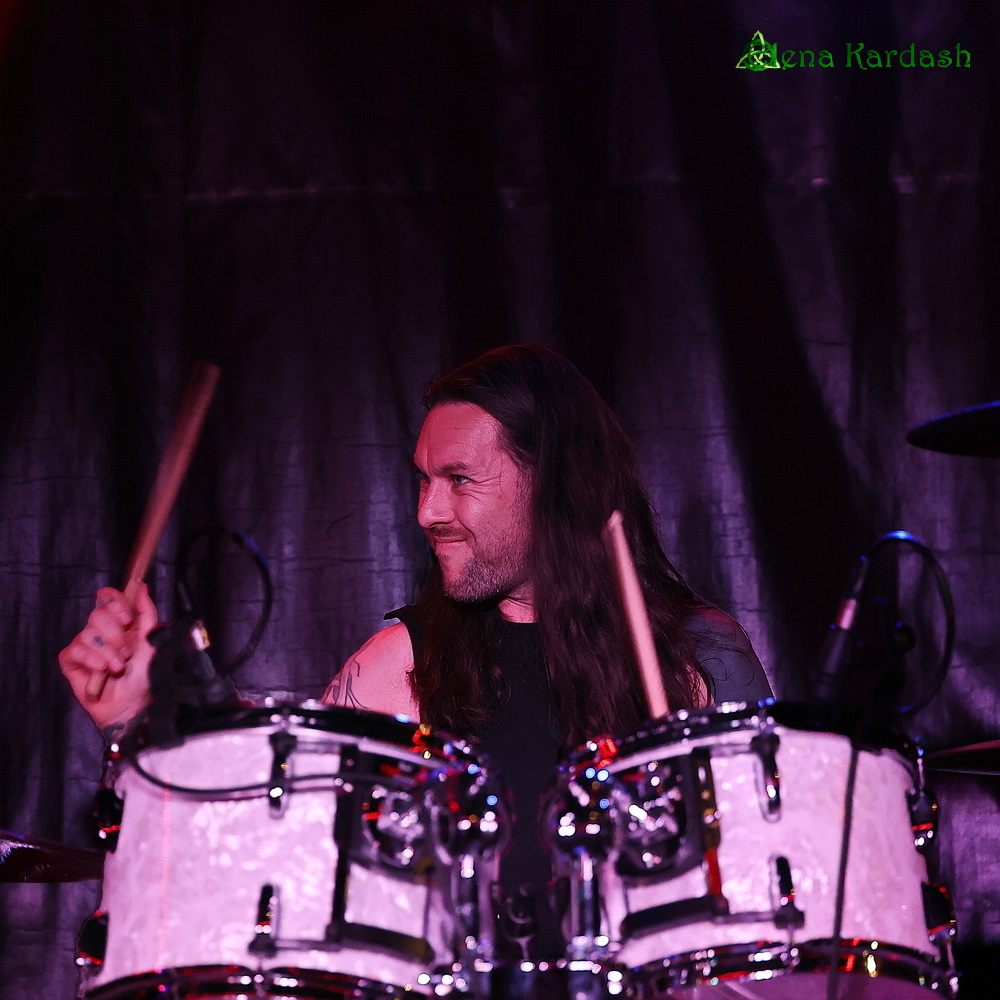
Fue inmediatamente después de este despliegue cuando el frontman detuvo el plano sobre las tablas para presentar formalmente a los miembros de la banda, entrelazando la ejecución con una constante predisposición al humor. Romero aprovechó la ocasión para ironizar con sorna sobre las distancias geográficas, remarcando ante los asistentes que el baterista Chris Allan procedía de un Londres que “ya no pertenece a Europa”. Al escuchar esto, Allan reaccionó de forma espontánea desde su set preguntando en alto “¿Qué?” (“What?”), lo que provocó las risas inmediatas de una audiencia totalmente entregada a la complicidad de la tarima. Asimismo, el vocalista matizó la presentación de Rafa Basa al catalogarlo simplemente como “el cantante chileno”, recordando a la concurrencia que se trasladó a Madrid, España, en el año 2009, obtuvo la nacionalidad española y viaja con orgullo por los escenarios internacionales defendiendo que España es su segunda casa y portando su bandera con soberano orgullo. Tras este discurso, el frontman enlazó el ambiente con la interpretación musical final; con una actitud arrolladora, invitó a la concurrencia a cantar juntos la icónica versión electro-metal de Judas Priest, “Turbo Lover”, extraída de su disco “Raised on Heavy Radio”. La respuesta de los asistentes fue un trueno demoledor de gargantas entregadas al límite, dejando la sesión colectiva completamente resuelta a su favor y transformando el espacio en un hervidero de alta tensión que cerró por todo lo alto la descarga de la jornada.
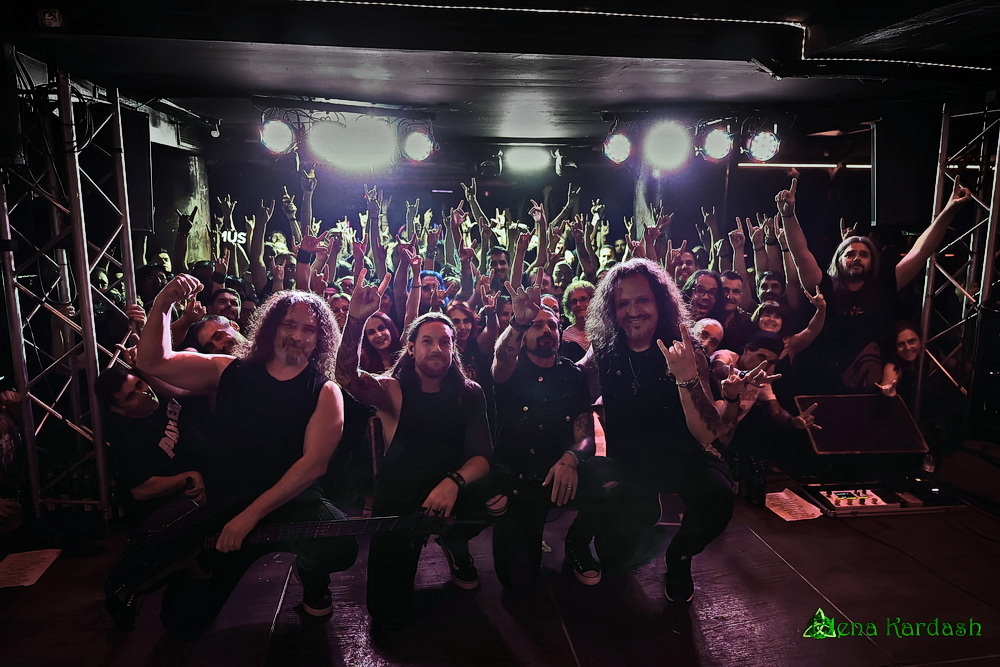
En balance neto, la jornada escenificada sobre las tablas de Zaragoza trascendió la simple ejecución técnica para convertirse en una celebración de intensidad instrumental y energía positiva. Lo vivido este sábado en La Casa del Loco dejó claro que el verdadero motor del circuito es la conexión humana; una velada extraordinaria compartida en estrecha compañía con las bandas, quienes demostraron una cercanía, un humor y una entrega incondicional que convirtieron el recinto en una auténtica fiesta de rock en vivo.
El éxito organizativo de la fecha exige un explícito reconocimiento tanto a la labor logística de Parranda Producciones como al despliegue técnico del staff de La Casa del Loco, cuyos integrantes facilitaron la actividad operativa en los preparativos y el desarrollo del directo. Fue un asalto sónico de solera monumental que cierra la jornada con un saldo inmejorable, dejando en los asistentes una colección de anécdotas memorables y unos recuerdos completamente imborrables. Una noche indestructible que ratifica que, cuando los titanes bajan a la trinchera con esa complicidad y alegría, compartiendo micrófono cara a cara frente al perímetro, el legado de la música en directo se blinda para siempre.
06/06/2026 – La Casa del Loco (Zaragoza)
CRÓNICA Y FOTOGRAFÍAS: ELENA KARDASH
ENGLISH VERSION / VERSIÓN EN INGLÉS
REVIEW AND PHOTOGRAPHS: ELENA KARDASH
Long before the official opening of the venue’s access gates, the outdoor asphalt of Zaragoza was already buzzing with that electric tension that only major events deliver to the circuit. The atmosphere was a boiling tide of cross-conversations centered around the upcoming sonic outburst and the logistics behind the venue change announced a few days prior – an unexpected twist that, far from cooling expectations, injected an extra wave of urgency and excitement into the crowd. The sidewalk became the exact thermometer of the evening, with an unwavering front row enduring the heavy afternoon heat with a single goal: to witness the performance of the night’s most anticipated powerhouses, the machinery of Iron Savior and the international magnetism of Ronnie Romero. The breaking point arrived on the pavement when the members of Alacrán stepped through the doors after wrapping up their soundcheck duties on stage. In that precise moment, the crowd fully locked onto them, surrounded by a tight guard of fans, followers, and lifelong friends that distilled a dense wave of local pride and unconditional support.
When the access gates finally opened, the interior of La Casa del Loco delivered the first major logistical victory of the day: a remarkably cool, air-conditioned atmosphere that acted as an immediate relief for the crowd after enduring the stifling outdoor heat. This thermal shift instantly reset the audience’s high spirits, transforming the accumulated exhaustion into a renewed, electrifying energy. With focus locked onto the stage, the crowd gathered into the front rows with overwhelming enthusiasm, holding their breath by the initial setups, fully prepared to surrender to the upcoming instrumental storm.
ALACRÁN
The spark was ignited by Rafa Basa in his DJ duties; the nationwide journalism living legend took over the microphone, distilling an overwhelming closeness, humor, and complicity that immediately fired up the venue’s perimeter to formally introduce the emerging rage of local heroes Alacrán. Originally formed in 2012 within the depths of the Aragonese scene with a proposal firmly anchored in classic 80s-style Heavy Metal, the lineup proved on stage why they have consolidated as one of the most compact and tenacious bands in the northern peninsula. With a direct, raw sound free of artificial additives, the band defended their underground circuit reputation through sheer mileage, high-voltage riffs, and concussive Spanish lyrics, rescuing the heritage of leather-and-studs metal as an indispensable generational torch.
Onstage, the performance unleashed a tight, devastating rhythmic force that offered not a single millisecond of truce. The onslaught was fronted by the wild, passionate attitude of Sergio “Cachorro” on vocals, whose raspy delivery connected straight with the guts of the front row. He was flawlessly supported by the guitar ironclad defenses of Christian “Oli” delivering a masterclass on the strings, the airtight pulse of Diego “Petroski” anchoring the low frequencies on bass, and the crisp, crushing strike of Roberto “RK” Monforte driving the groove from the back of the platform. The setlist unfolded as a continuous storm where the crowd, completely magnetized by the carnal intensity of the live set, reacted with a collective roar to the impact of “Luzifer” and the power of “Volver a nacer”. Every solo and rhythmic impact set the perimeter on fire, weaving the venue’s dedication with direct tracks like “Tenemos que salir” and the complicit edge of “No me digas que no lo ves”. The raw nerve peaked with the crushing delivery of “Halcones de la noche” and the indestructible speed of “Síndrome”, turning the room into a boiling cauldron of collective high-voltage that left the atmosphere perfectly electrified before the next assault of the evening.
IRON SAVIOR
Following the local band’s powerful closing set, the transition atmosphere was ruled once more by Rafa Basa’s musical curation as a DJ. The peak connection point during this interlude arrived with the playback of Primal Fear’s immortal anthem, “Metal is Forever”; a high-voltage sonic outburst that led to one of the most unique reactions, as it was spontaneously chanted with a joyful smile by Iron Savior’s own drummer, Patrick Klose, while he was making technical adjustments to his set at the back of the platform. The ultimate defining image of this prelude was cemented onstage when Piet Sielck himself stepped out to share an embrace with the broadcaster; a moment of pure brotherhood of steel where they shared a complicit laugh face to face, reflecting the poise and mutual respect forged by three decades at the forefront of the industry before unleashing the band’s storm.
It was then that the stage duties were formally taken over by the heavy machinery from Hamburg. Founded in 1996 by the legendary guitarist, producer, and sound engineer Piet Sielck alongside Kai Hansen and Thomen Stauch, Iron Savior stands as an essential and indestructible pillar of Teutonic Power Metal. Born under a sci-fi concept narrating the saga of an artificial intelligence mothership, the lineup has remained strictly loyal for three decades to an ironclad sound. Live, the formation aligned a compact block that deployed a millimeter technical skill member by member, conquering an extremely dedicated audience that passionately chanted every single lyric and chorus.
At the front of the ship, Piet Sielck dictated a master class of heritage at the controls of his guitar and his imposing vocal register; his pick technique exhibited a rock-solid force, executing a dense and airtight palm-muting that anchored the rhythmic foundations while modulating his signature raspy baritone voice, opening fire with the direct power of “Way of the Blade” and triggering a wave of collective energy through the impact of “Roaring Thunder”. At his side, the indestructible firewall of Joachim “Piesel” Küstner on the twin-guitar duties demonstrated a supreme interpretative lordliness, traveling across the frets with an astonishing digital synchronicity and a clinical sharpness in the neoclassical solos that electrified the front row, completely magnetized by tracks like “Starlight” and the dense high-voltage of “Souleater”.
The rhythm section operated with the precision of a Teutonic chronometric gear, making the venue shake to the beat of “In the Realm of Heavy Metal”, the drive of “Hall of the Heroes”, and the anthemic melodies of “Never Stop Believing”. Bassist Patrick Opitz contributed an airtight shield to the four strings, unleashing a heavy, liquid, dense pulse that went far beyond basic root notes, expanding lines through an aggressive pick technique and a solid cadence that anchored the melody under absolute control, while the crowd fully locked onto the performance, chanting through the lines of “Together as One”. Driving the performance from the back of the platform, the devastating punch of drummer Patrick Klose was the high-voltage engine of the delivery; his double bass drum technique, his mechanical speed, and relentless subdivision in the offbeats kept the band’s revolutions at the millisecond level, calibrating the flow of watts with a commendable structural parsimony and cleanliness.
The ultimate climax of communion between the stage and the venue sparked right before tackling one of their defining anthems. From the crowd, a hand reached out to deliver a small note straight into Piet Sielck’s hands; the Hamburg frontman took it, paused, and read the written title out loud: “Heavy Metal Never Dies”, unleashing an instant roar from the audience ahead of the imminent classic. Right after, with majestic dynamism, Sielck split the entire venue into two separate sides, – left and right -, triggering a high-voltage competition to see which side could shout the chorus of the compositionthe loudest. The crowd’s response was a thunderous storm of fully dedicated voices, turning the room into a boiling cauldron of collective high-voltage. The final stretch of the performance kept the band’s energy surging at the absolute limit through the wild sharpness of “Condition Red” and the destructive climax of “Atlantis Falling”, leaving the stage completely on fire and the audience fully charged ahead of the evening’s climax.
RONNIE ROMERO
With the room completely charged after the Teutonic encounter, the transition interlude broke when Rafa Basa took the microphone once more to formally introduce Ronnie Romero as “the Chilean singer,” unleashing the ultimate roar from an audience ready for the final act. The closing stretch of the evening at La Casa del Loco arrived with Romero’s solo onslaught. Few 21st-century career paths have reached the international impact of this vocalist, whose breakthrough sparked when he was handpicked by Ritchie Blackmore to front Rainbow’s return, boosting his voice to the absolute forefront of the global industry alongside top-tier projects like Michael Schenker Group, CoreLeoni, Elegant Weapons or Gotus, as well as his work with the outstanding Spanish lineup Delalma and his partnership with virtuoso axeman Gus G.
But beyond the international accolades, what truly blew the fuses of the night was that absolute availability, that raw complicity, and that magnetic energy that was palpable right at the front of the stage. Ronnie Romero is not a docile artist who hides behind the security team; he’s a whirlwind who seeks eye contact, who interacts with the front row with a disarming, passionate ease and who knows perfectly how to ignite the perimeter of the venue through a fluent and direct communication that makes each attendee a participant in the intensity of the performance. At the front of the instrumental army, the complicity was felt at the millisecond level in every look and every note, bridging focus during the impact of “Backbone”, the voltage of “Never Felt This Way”, the drive of “Eternally” and the raw power of “Stand Up and Shout”.
The performance unleashed a collective, colossal force member by member, making the crowd react down to the millisecond to the heavy set of “Bring the Rock”, “Lost in Time”, and the intensity of “Chased by Shadows”. Chris Allan’s delivery was a constant thunder from the back of the platform, setting the rhythm with a crushing beat that pushed the band’s energy to the limit, showcasing surgical accent placement and a relentless subdivision that wrapped around the perimeter, perfectly coordinated with the dense, airtight, and liquid bass of Andy Arcangeli. The Italian musician provided a high-class shield to the five strings, unleashing a heavy pulse that anchored the low frequencies under absolute control.
The moment of highest solemnity arrived with Rainbow’s monumental masterpiece, “Stargazer”. With a commanding attitude and capturing the venue’s core energy, Ronnie Romero introduced this milestone by rendering an explicit, eternal gratitude to Ritchie Blackmore, highlighting before an extremely dedicated audience that Rainbow remains his favorite band and “Rising” his defining desert-island album. The lineup tackled the track’s vast complexity under absolute mathematical precision and unyielding virtuosity, distilling a raw intensity that completely wrapped around La Casa del Loco’s perimeter as the front row passionately chanted every single line before moving into the drive of “Keep on Falling” and the sharpness of “Hideaway”.
And governing the melodic flank, José Rubio’s six strings dictated an authentic masterclass of virtuosity and heritage. The axeman showcased flawless technical mastery, shredding the frets with astonishing synchronicity and clinical sharpness in each neoclassical solo, combining a millimetric alternate-picking speed with absolute control over bendings and a biting, mature vibrato. His stage presence and instrumental dedication exuded a dense and heavy vibration, a high-voltage current that transcended the platform and was felt carnally in the atmosphere, capturing the gaze of the crowd and weaving that invisible thread of mutual attraction, charisma, and real nerve that turned the evening into an indestructible and unforgettable milestone.
The final stretch was channeled through “Black Dog”, an original track from his 2025 album whose background history was cleared up with irony by the frontman: a composition written in honor of his own black dog, breaking away from Led Zeppelin’s traditional anthem via a devastating tuning and flawless vocal grit. The ultimate climax exploded right after across the venue: the lineup unleashed a high-voltage sonic onslaught by tackling the indestructible speed of Rainbow’s monumental anthem, “Kill the King”, driving the front row into pure sonic ecstasy.
It was immediately after this deployment that the frontman paused the momentum on stage to formally introduce the band members, weaving his execution with a steady predisposition to humor. Romero took the opportunity to joke about geographical distances, highlighting before the crowd that drummer Chris Allan came from a London that “no longer belongs to Europe.” Upon hearing this, Allan reacted spontaneously from behind his set, asking out loud “What?”, triggering immediate laughter from an audience fully surrendered to the stage’s inner complicity. Furthermore, the vocalist addressed Rafa Basa’s introduction labeling him merely as “the Chilean singer,” reminding the crowd that he moved to Madrid, Spain, in 2009, gained Spanish citizenship, and proudly travels international stages defending Spain as his second home while carrying its flag with sovereign pride. After this speech, the frontman bridged the atmosphere with the final performance; with a commanding attitude, he invited the entire audience to chant together the iconic electro-metal cover of Judas Priest, “Turbo Lover”, taken from his album “Raised on Heavy Radio.” The crowd’s response was a thunderous storm of fully dedicated voices, leaving the collective session completely resolved in his favor and turning the room into a boiling cauldron of collective high-voltage that closed the day’s performance on the highest note.
In net balance, the evening showcased on the Zaragoza stage transcended mere technical execution to become a celebration of instrumental intensity and positive energy. What was experienced this Saturday at La Casa del Loco made it clear that the true engine of the circuit is human connection; an extraordinary evening shared in close company with the bands, who displayed a closeness, humor, and unconditional dedication that turned the venue into an authentic live rock party.
The organizational success of this date demands explicit recognition for both the logistical work of Parranda Producciones and the technical deployment of the venue’s staff, whose members streamlined the operational activity during the setups and the development of the show. It was a sonic onslaught of monumental heritage that closes the day with an unbeatable outcome, leaving the attendees with a collection of memorable anecdotes and completely unforgettable memories. An indestructible night that confirms that when the titans descend into the trenches with such complicity and joy, sharing the microphone face to face in front of the perimeter, the legacy of live music is shielded forever.
Entradas relacionadas
Lo siento, debes estar conectado para publicar un comentario.