
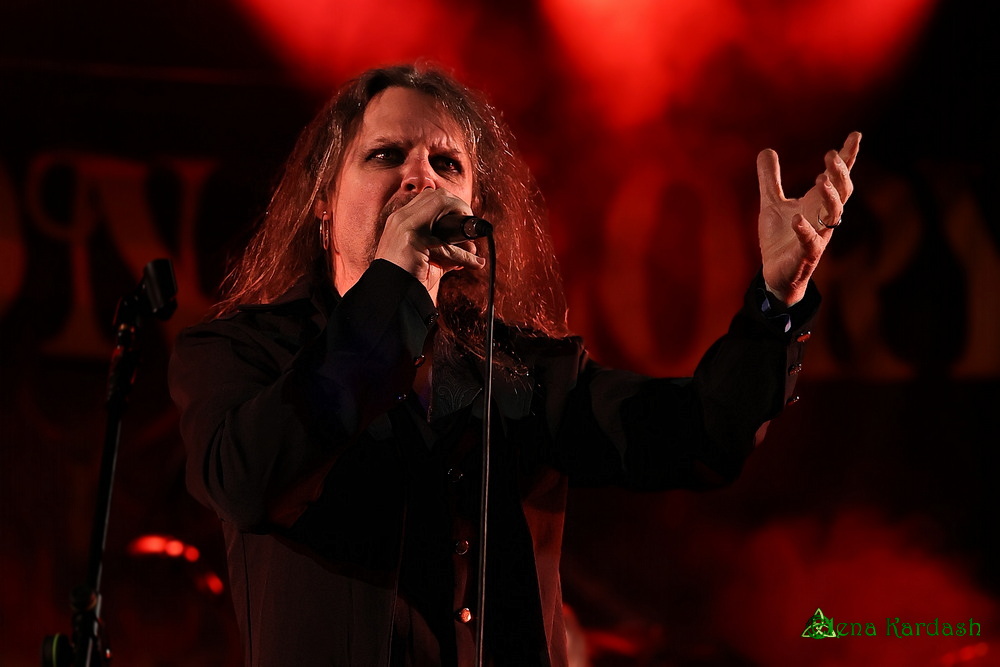
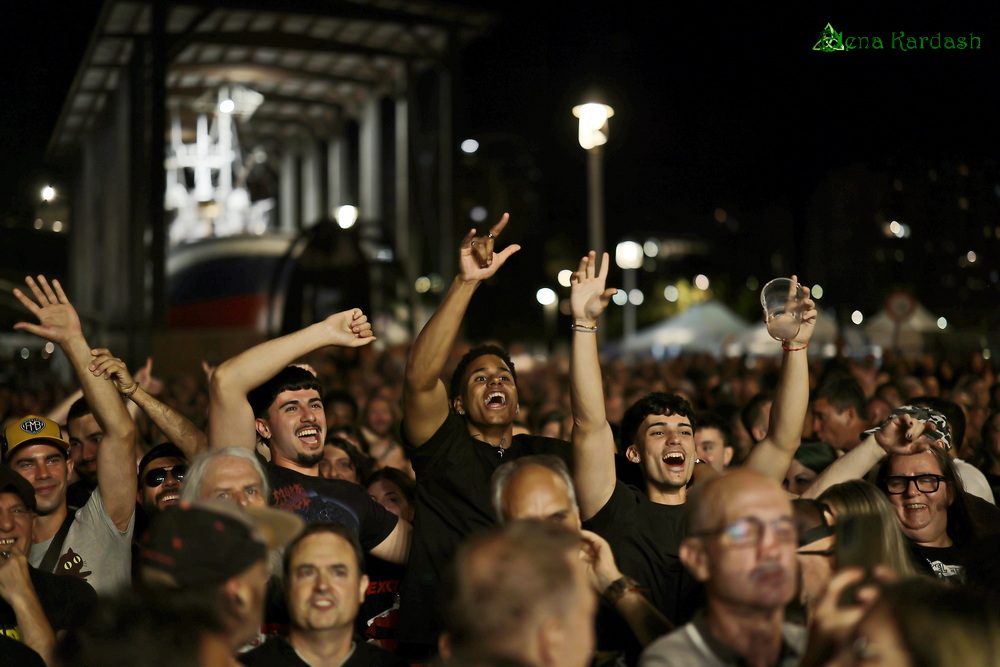
La jornada de apertura del Kabiefest en el recinto portuario de Santurtzi se consolidó como un bastión estratégico de trascendencia internacional para la vanguardia y el legado del metal clásico y contemporáneo. Durante este primer asalto, el festival vizcaíno se transformó en una pasarela de alto voltaje, donde la pujanza de las formaciones locales más incisivas se midió de igual a igual con transatlánticos internacionales de indiscutible valor y respetable trayectoria en el circuito mundial. Desde la apertura de los controles, el evento dictó su propia ley mediante una soberana solidez organizativa, una respuesta de público masiva y una producción técnica orientada a la fidelidad y la contundencia del sonido directo, consagrando el puerto como el auténtico epicentro de la actividad metalera del norte peninsular.
MS. MISSERY
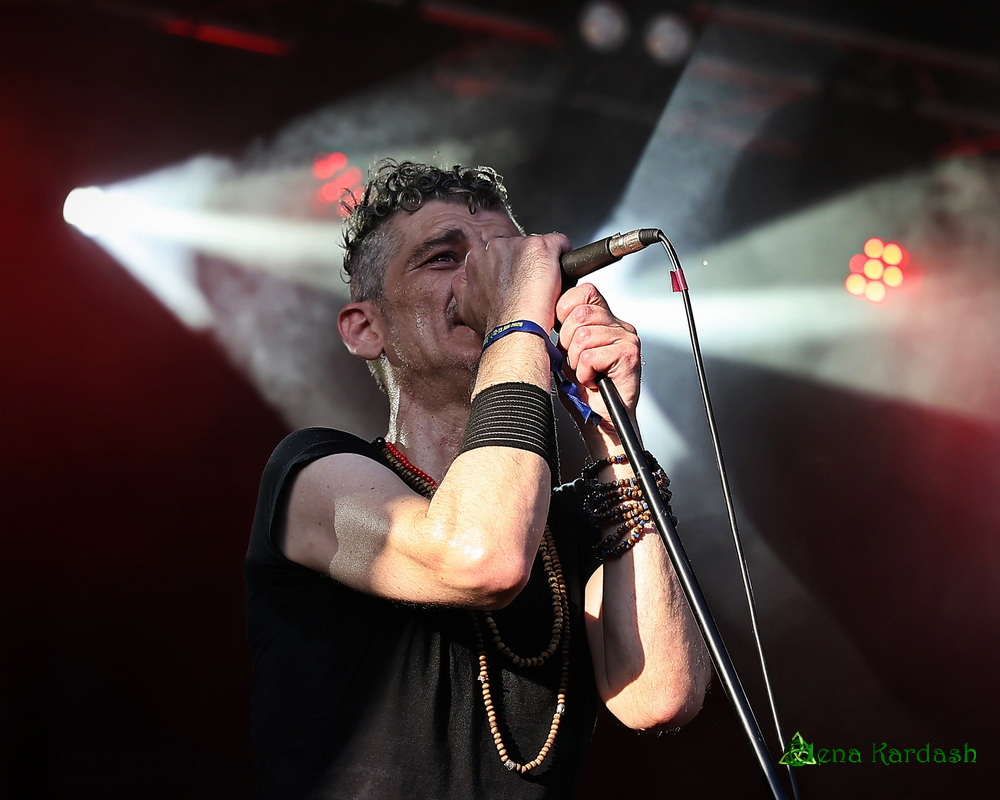
La actividad sobre el escenario comenzó con la actuación de Ms. Missery. Fundada en Portugalete en junio de 2022, la formación de rock-metal alternativo defendió su repertorio mediante un directo caracterizado por la solidez instrumental y una ejecución desprovista de artificios. La propuesta de la banda se sustentó en una sincronía milimétrica sobre las tablas, donde la complicidad entre los músicos y una puesta en escena directa permitieron conectar rápidamente con las primeras filas del recinto portuario, fijando un sólido precedente para el resto de las bandas del cartel.
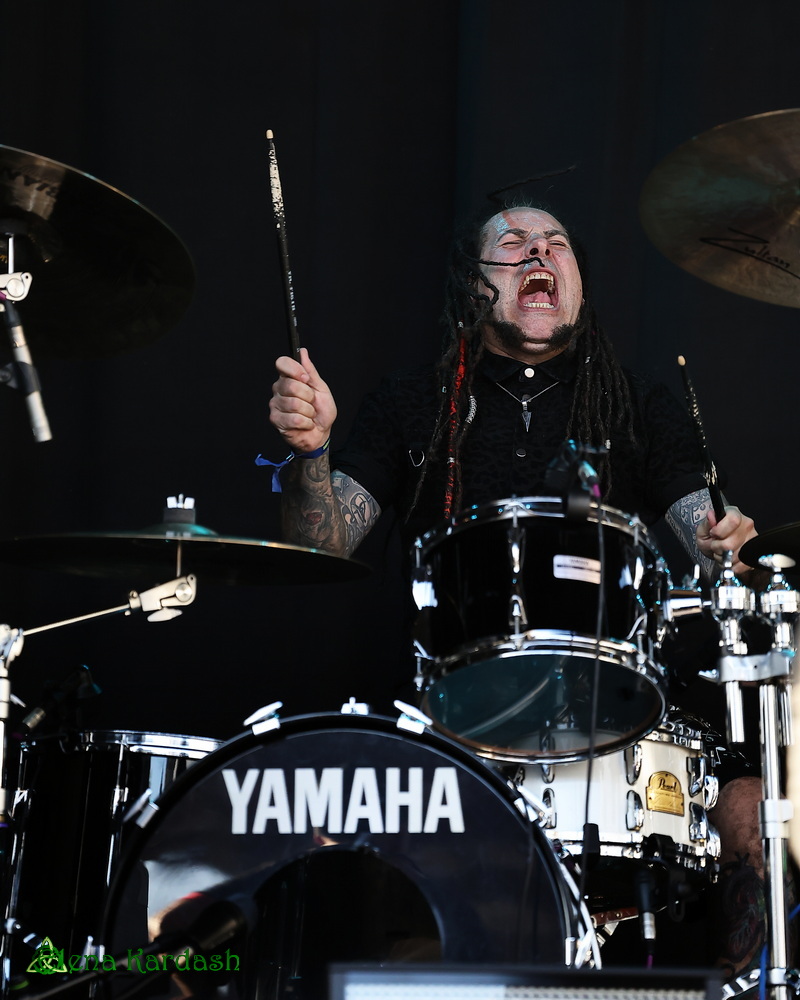
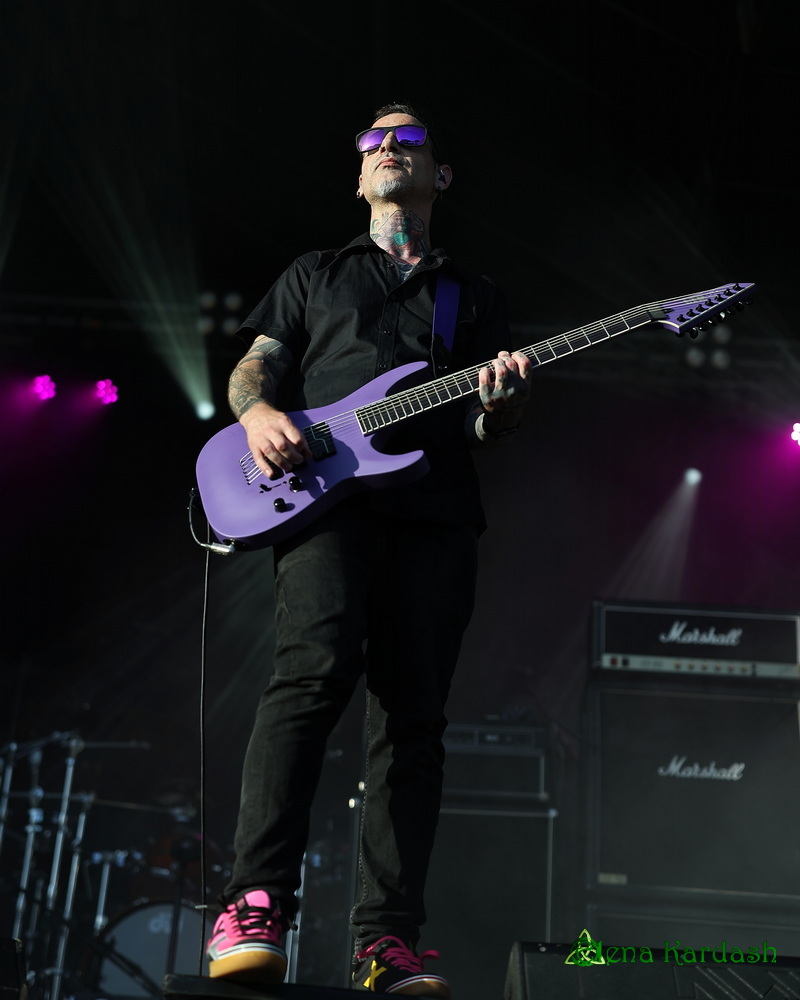
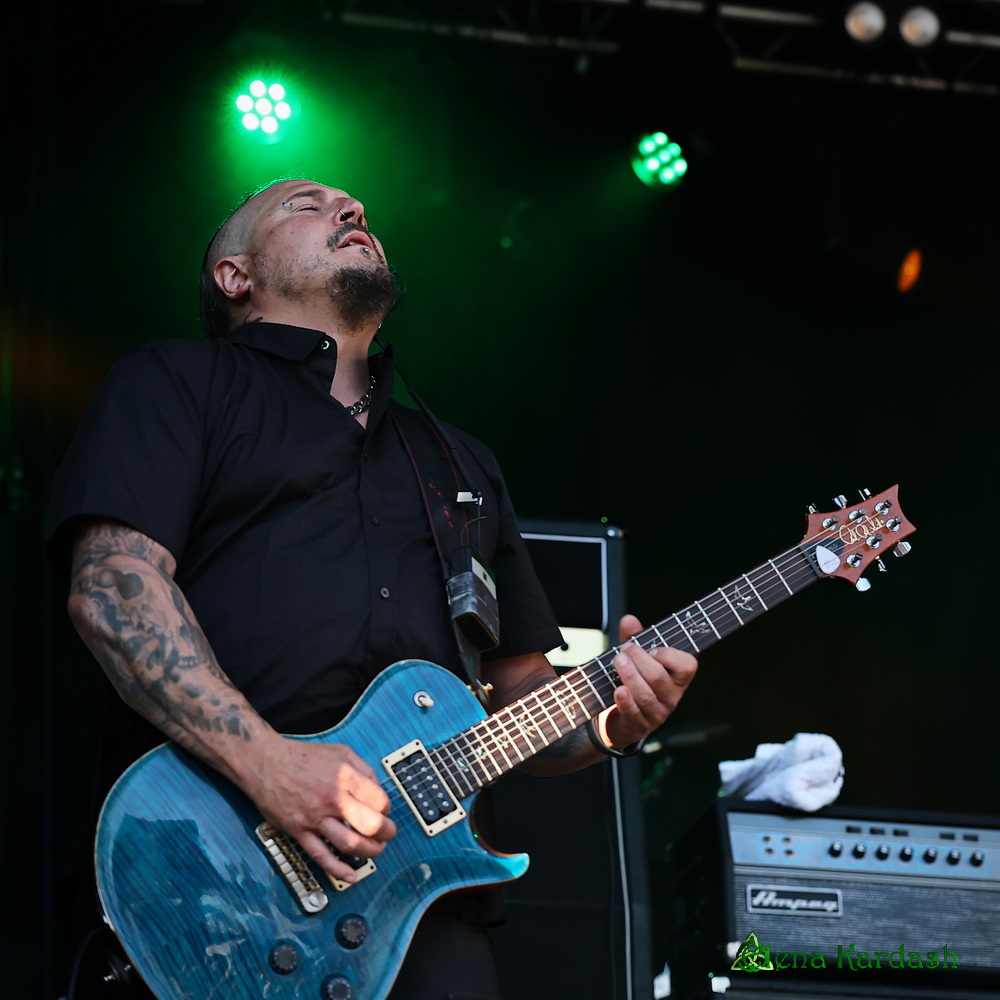
La progresión de la descarga, guiada de forma estricta por el orden de su repertorio desde la apertura con “Hey Men, Amen!!” y “The Life You Live“, mostró a una banda compacta en su ataque frontal. Al estallar “The Navel Of The World“, la sección rítmica se convirtió en el eje de tracción del grupo. El baterista José Antonio “Mogo” Mogollón comandó el tempo con una entrega física intensa, empleándose a fondo en cada impacto sobre la caja con una acentuación que contagió al resto de la línea. Ese pulso pesado fue recogido con solidez por el guitarrista Jonathan “Toci” Rodríguez durante las transiciones de “Get Out Alive” y “Vain Pride“; su ejecución de los solos reflejó un estado de concentración absoluta con los ojos cerrados y la postura entregada por completo a la vibración y al sustain de las cuerdas.
El tramo central del directo, marcado por el rugido de “Do Extintion” y la contundencia de “The Urge“, consolidó el bloque sonoro de la banda. El bajista Asier Castro asumió el control de la estructura rítmica con una firme presencia, proyectando los coros con una respuesta física precisa. Esta base instrumental quedó perfectamente doblada en “Things That Worth The Pain” y el reciente sencillo “Love Is Not A Gift” por la presencia del guitarrista Jon Ander “Nane” López, quien además de pilotar las programaciones electrónicas, los sampleos y sintetizadores, mantuvo una actitud estanca, fija y de control absoluto, concentrando el voltaje de las rítmicas pesadas.
El clímax y el desenlace final de su actuación llegaron acoplados a la trilogía final de “Holly Sinners, Wicked Saints“, el desgarro sónico de “Battlefield” y el último acople de “Be Here For Long“, donde el vocalista Ibon Sáez consumó la entrega de la banda. Su interpretación fue un ejercicio de exigencia vocal y resistencia física, manteniendo el control del micrófono y reflejando el esfuerzo real del directo. Ms. Missery firmó una sólida apertura, demostrando la compenetración técnica de sus cinco músicos sobre las tablas y dejando el listón en una cota elevada.
RISE TO FALL
La presentación de los bilbaínos Rise to Fall en el Kabiefest expuso la madurez de una formación cohesionada en el death metal melódico de la escuela clásica, sirviendo además como escenario idóneo para conmemorar el vigésimo aniversario de la fundación de la banda. Creado en 2006 en el País Vasco, el grupo definió en 2010 la alineación estable que hoy sostiene su proyección internacional, integrada por Dalay Tarda (voz), Hugo Markaida (guitarra), Dann Hoyos (guitarra), Xabier Del Val (batería) y Javier Martín (bajo). Su trayectoria cuenta con hitos destacados como su debut Restore The Balance (2010) editado por Coroner Records, Defying The Gods (2012) – que les llevó a girar por Rusia y Ucrania, End VS Beginning (2015) con su posterior tour por China, e Into Zero (2018). Su actualidad viene marcada por el lanzamiento de su quinto álbum de estudio, The Fifth Dimension (2023), editado a través del sello Noble Demon y respaldado por intensas giras por Europa y Japón durante 2024. El directo de la banda se articuló sobre un engranaje humano preciso, donde la complicidad técnica y la comunicación visual definieron un bloque instrumental sólido, capaz de conectar de forma directa con la masa del puerto sin recurrir a efectismos escénicos.
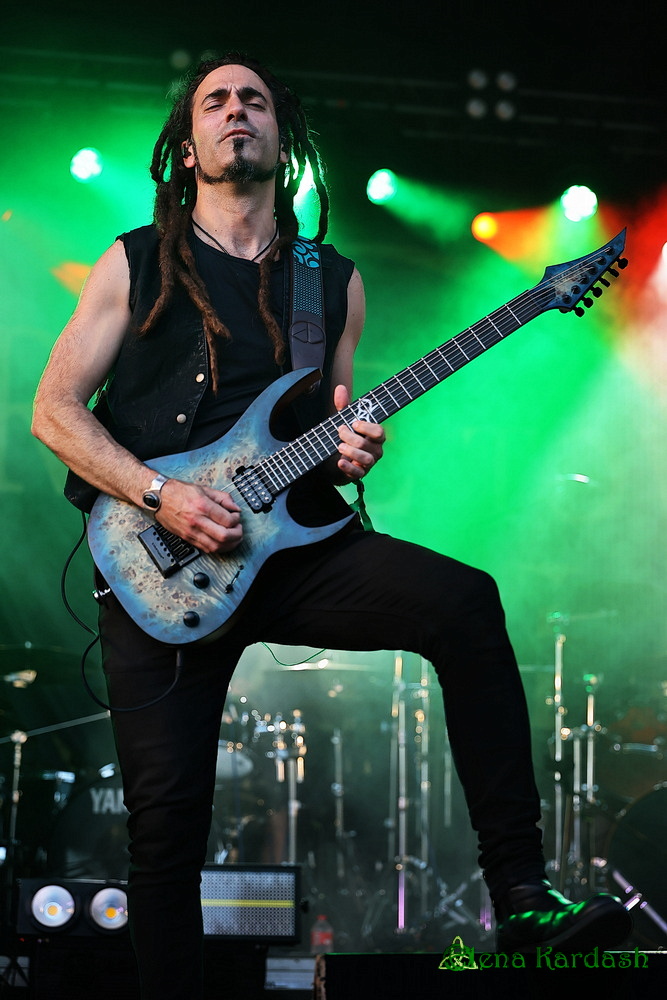
El arranque del concierto estableció las pautas de esta dinámica a través de la entrega física consecutiva de “The Descendant” y “Ascend to the Throne”, composiciones que fijaron el ritmo en las primeras filas. Con la entrada de “In the wrong hands” y “End vs Beginning”, la intensidad instrumental encontró su canal en la ejecución del guitarrista Dann Hoyos. Su posición en el escenario reflejó un estado de concentración interpretativo absoluto; con los ojos cerrados y la postura entregada por completo al desarrollo técnico del solo, Dann proyectó cada pasaje melódico con una gestualidad concentrada que el público asimiló de inmediato, respondiendo al unísono ante la progresión de las líneas armónicas de “Hierophant” y “The compass“.
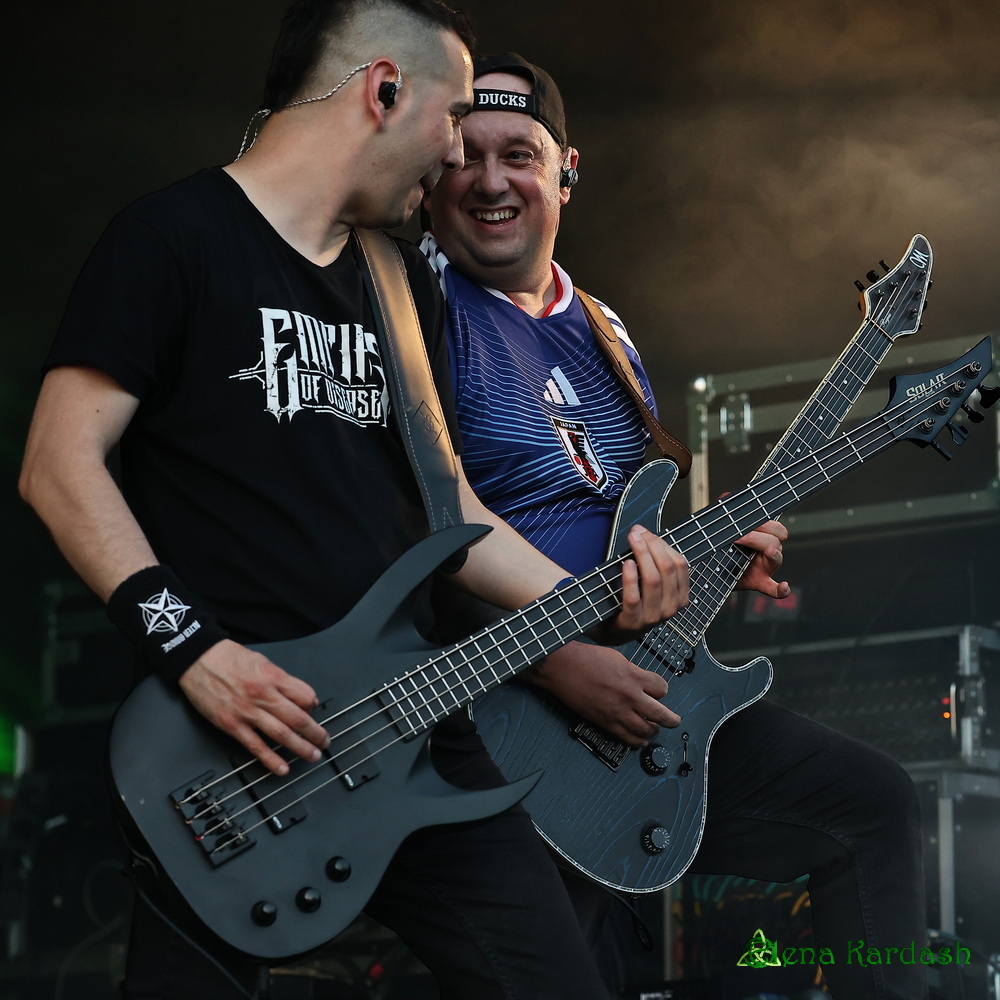
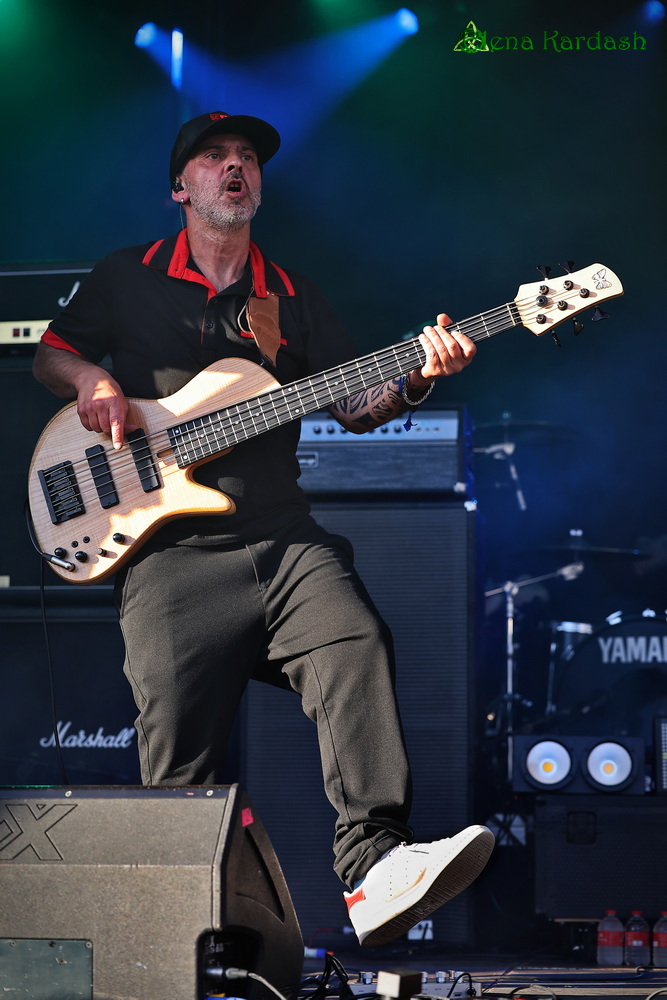
El verdadero cimiento de la contundencia sónica del grupo se desveló en el centro de las tablas mediante la sincronía del bajista Javier Martín y el guitarrista Hugo Markaida durante los compases de “…Kills the reason” e “Inner Scream“. La complicidad de ambos músicos se tradujo en miradas constantes de control y sonrisas de complicidad que evidenciaron la seguridad de su base rítmica. Javier Martín, desde su posición, y Hugo Markaida, castigando el diapasón a su lado, arengaron activamente a la primera línea del festival, buscando el contacto visual directo y sincronizando sus movimientos para incitar al movimiento de la masa justo antes de inyectar las transiciones pesadas de “Redrum” y “Infinite crossroad“.
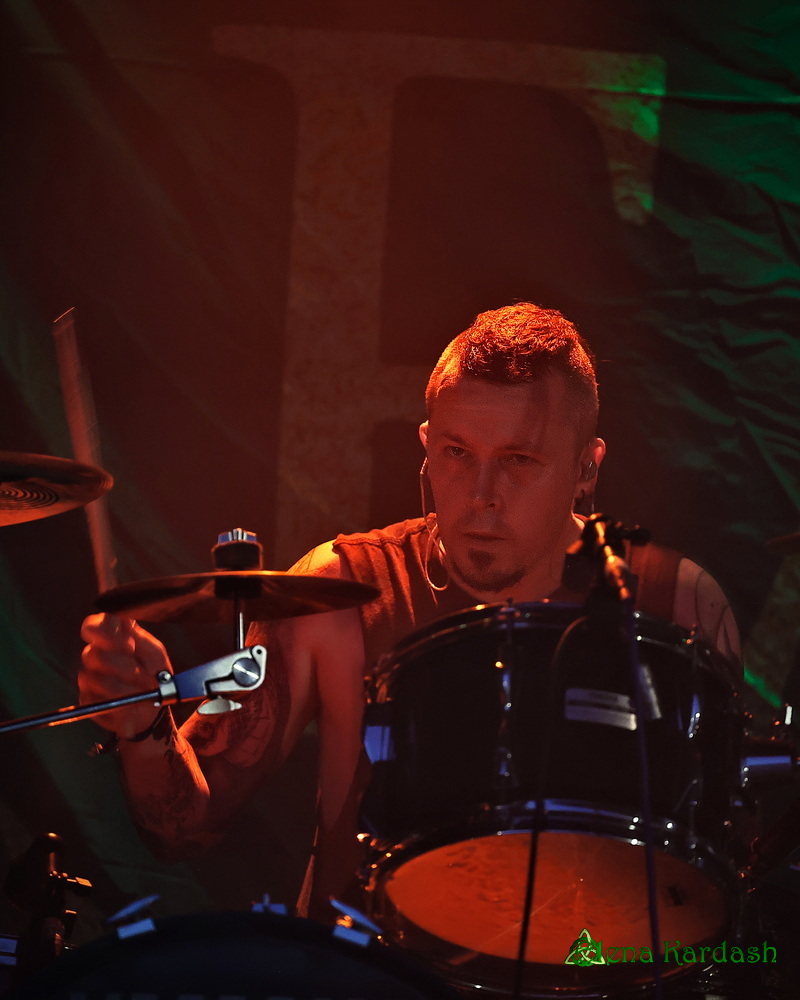
El motor encargado de sostener la velocidad y el metrónomo de esta apisonadora desde la retaguardia fue el baterista Xabier del Val. Su labor durante los exigentes patrones de “Test of time” y “Decoding reality” fue un ejercicio de gélida fijeza mental, manteniendo una postura imperturbable y los ojos fijos en la dinámica de sus compañeros para asegurar que la base rítmica avanzara sin fisuras. Su solidez técnica sirvió de anclaje perfecto para que el resto de la formación mantuviera el flujo comunicativo con la audiencia.
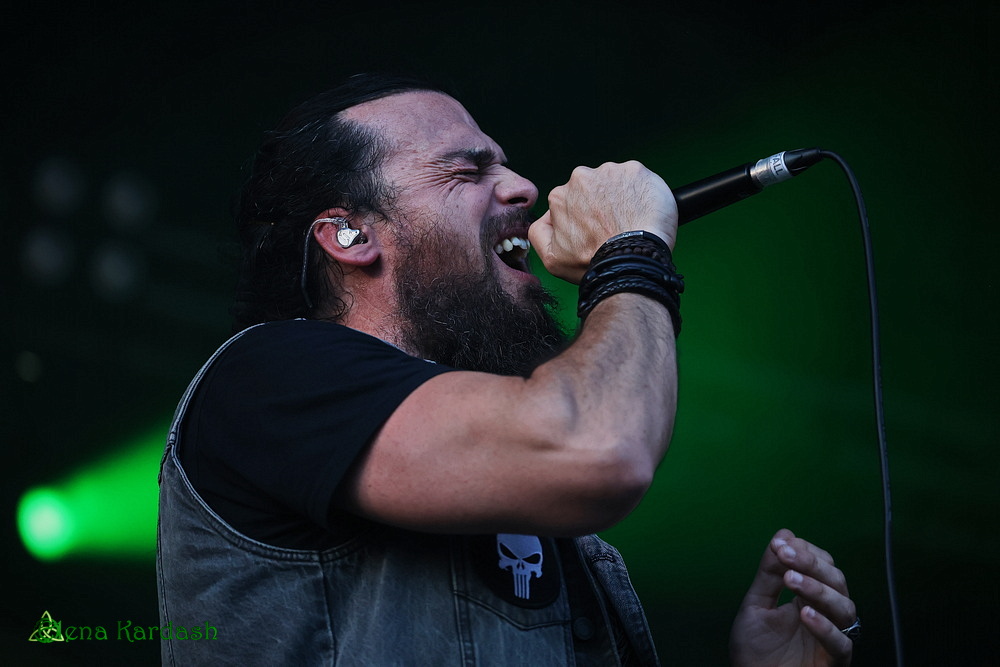
La apoteosis y el clímax de su actuación llegaron vinculados a los pasajes de “The threshold” y “Thunders of Emotions Beating“,donde el vocalista Dalay Tarda asumió la dirección absoluta del frente escénico. Su interpretación se caracterizó por un desgarro y una resistencia física real, aferrando el micrófono y dirigiéndose al foso con gestos firmes que demandaban la respuesta del puerto. La conexión directa con el público alcanzó su punto álgido cuando la banda detuvo el minutero para ejecutar “Blinded by Fear“, la mítica versión de At The Gates, dedicada con honestidad profesional a la memoria del fallecido vocalista Tomas Lindberg. Un homenaje que la audiencia recibió con el puño en alto, sellando un registro de categoría internacional basado en la autenticidad y el respeto mutuo entre los músicos y su gente.
CRIMSON GLORY
El clímax y plato fuerte de la primera jornada del Kabiefest se saldó con la descarga de uno de los transatlánticos más místicos y respetados del metal progresivo internacional: los norteamericanos Crimson Glory. Fundada en Sarasota, Florida, en el año 1982 bajo el nombre de Beowulf, la mítica formación expuso sobre las tablas la veteranía de un linaje de músicos que marcaron la historia con sus estructuras neoclásicas complejas y que hoy defienden su legado con una sincronía implacable. Tras sufrir la trágica pérdida de su vocalista icónico Midnight en 2009 y contar con la voz de Todd La Torre entre 2010 y 2013, la banda ha regresado con un bloque renovado y destructivo liderado por la impresionante voz de Travis Wills. Su puesta en escena se articuló sobre un bloque instrumental denso y puramente oscuro, capaz de conectar de forma directa con la masa del puerto sin recurrir a efectismos escénicos, demostrando por qué son mitos vivientes gracias a obras de culto imperecederas como su debut homónimo de 1986 y el conceptual Transcendence (1988).
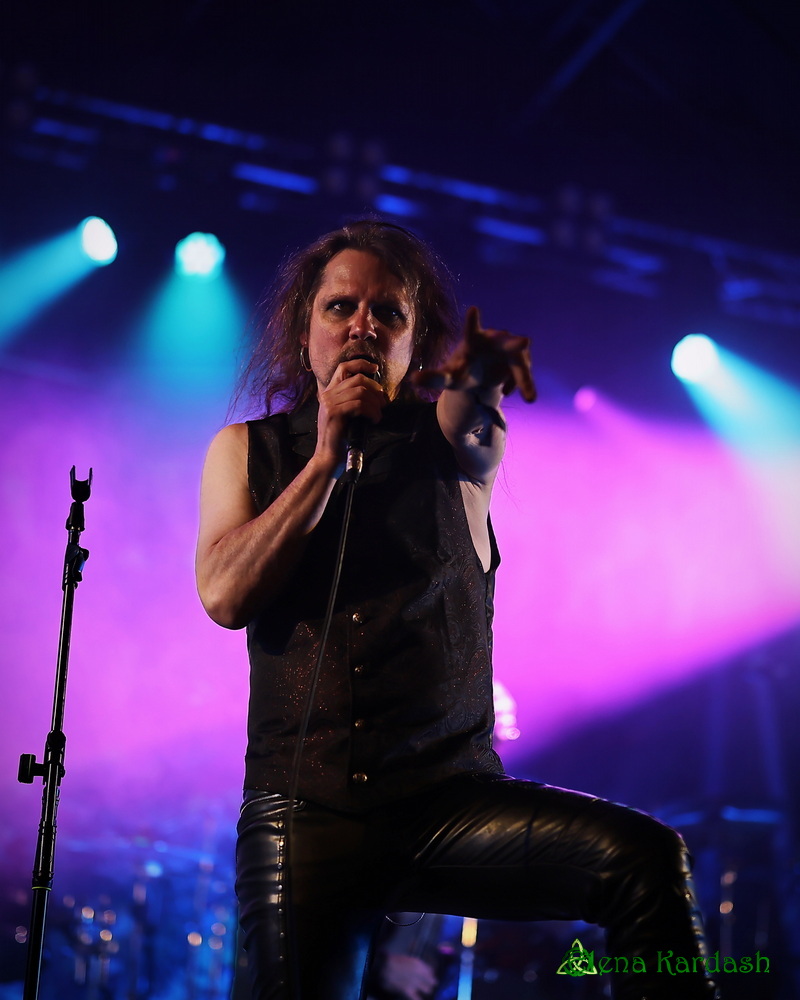
La apertura del directo estableció de inmediato las pautas de esta dinámica a través de la entrega física consecutiva de “Where Dragon´s Rule” y el bombardeo rítmico de “Valhalla“, composiciones que fijaron el ritmo del show y precalentaron las primeras filas del puerto antes de desatar la locura con “Dragon Lady“. La atmósfera adoptó una intensa saturación de luces moradas que recortaban los perfiles de la banda frente al fondo de sombras durante la interpretación consecutiva de “Hierophant” y “Angel in my Nightmare“. El frontman Travis Wills asumió el control del frente escénico con una ejecución vocal sólida y una puesta en escena sobria que gobernó el ritmo del directo. Con una postura de mando, Wills adelantó su posición para interactuar directamente con las primeras filas del foso, manteniendo la intensidad del espectáculo mientras enlazaba su descarga vocal con “Redden the Sun“.
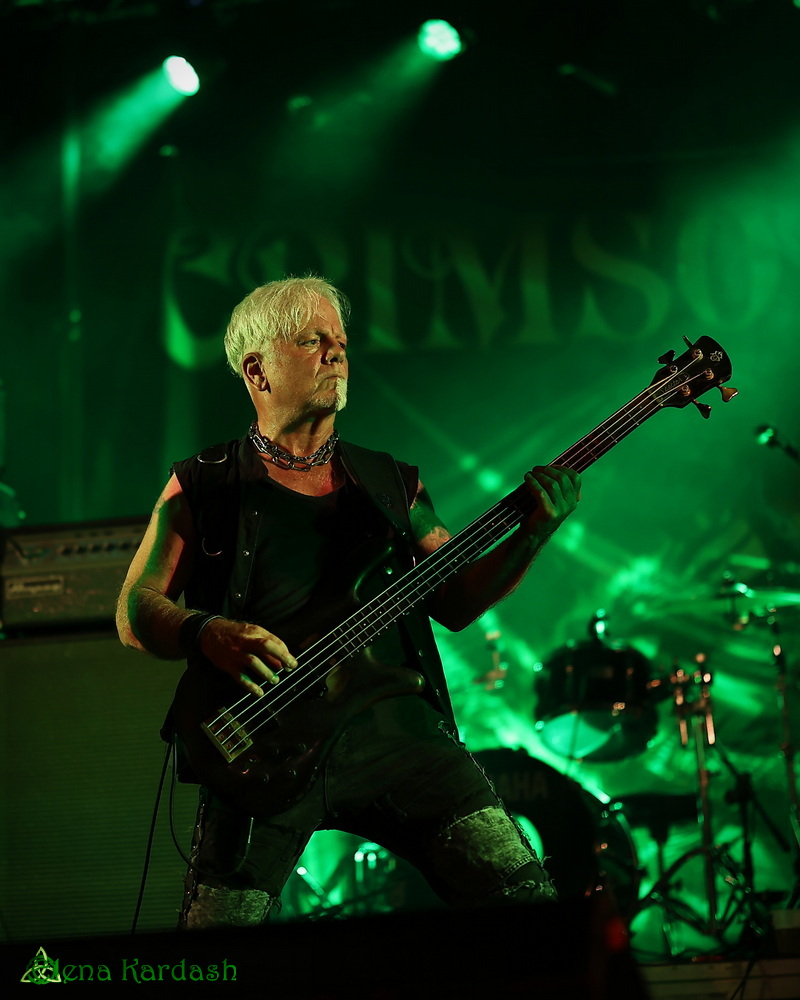
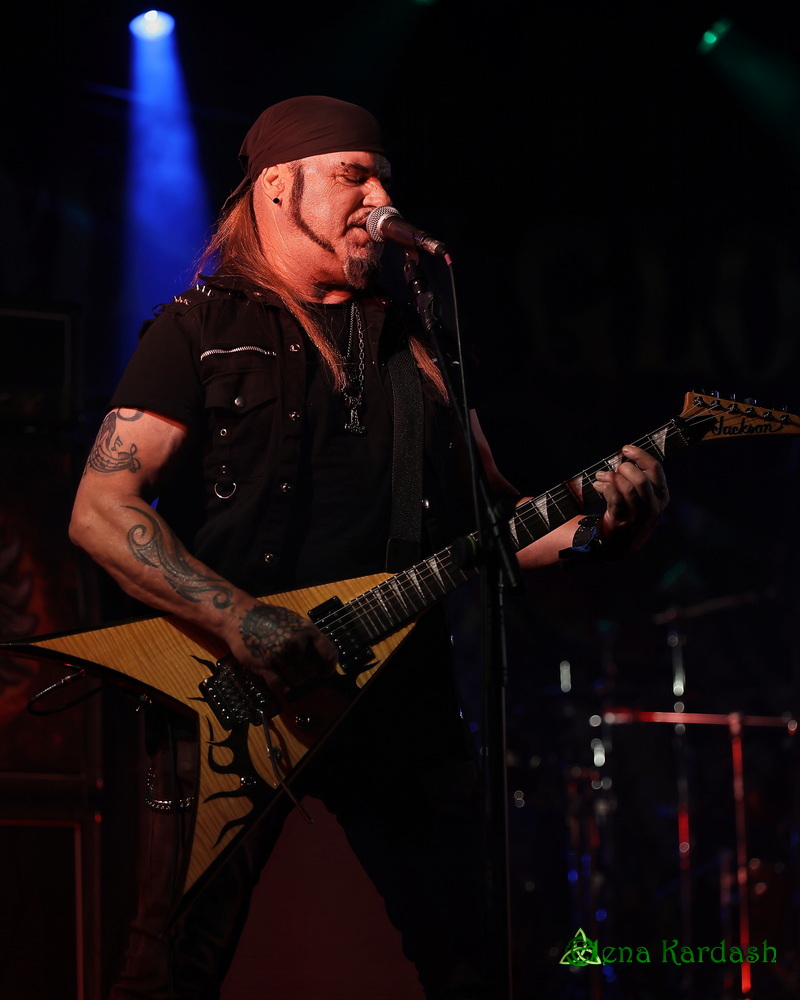
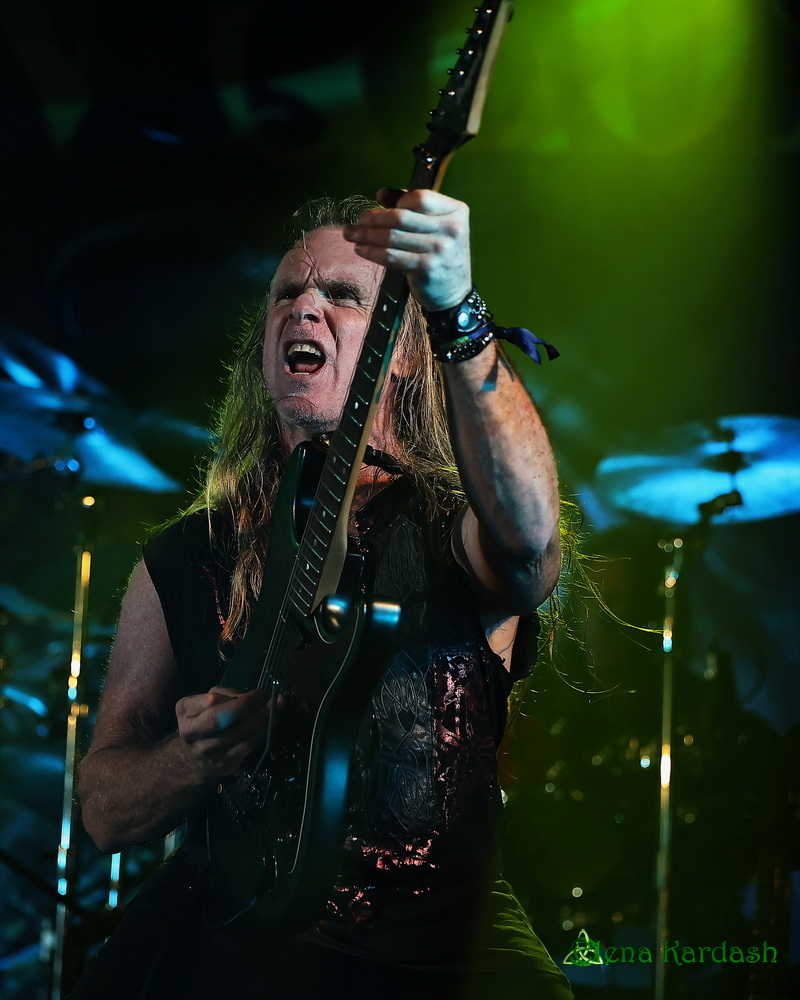
El verdadero secreto de la contundencia sónica de los norteamericanos se desveló en el centro de las tablas mediante la sincronía de su sección de cuerdas durante la ejecución de la icónica “Painted Skies“. El guitarrista fundador Ben Jackson y el bajista original Jeff Lords, respaldados por la solvencia técnica de Mark “Borgy” Borgmeyer en la otra guitarra, entrelazaron sus líneas instrumentales en un estado de absoluta conexión musical sobre las tablas. El bajista fundador Jeff Lords asumió el control de las frecuencias más graves con un aplomo e integridad técnica impecables, sosteniendo las líneas de las cuatro cuerdas como un auténtico cortafuegos rítmico. A su lado, el guitarrista Ben Jackson ejecutó las líneas de su instrumento con una actitud indomable, concentrando el vataje de sus rítmicas pesadas y sus solos limpios de polvo técnico, cohesionando la veteranía clásica del grupo en las transiciones dinámicas hacia“Lady of Winter” y“Masque of the Red Death”.
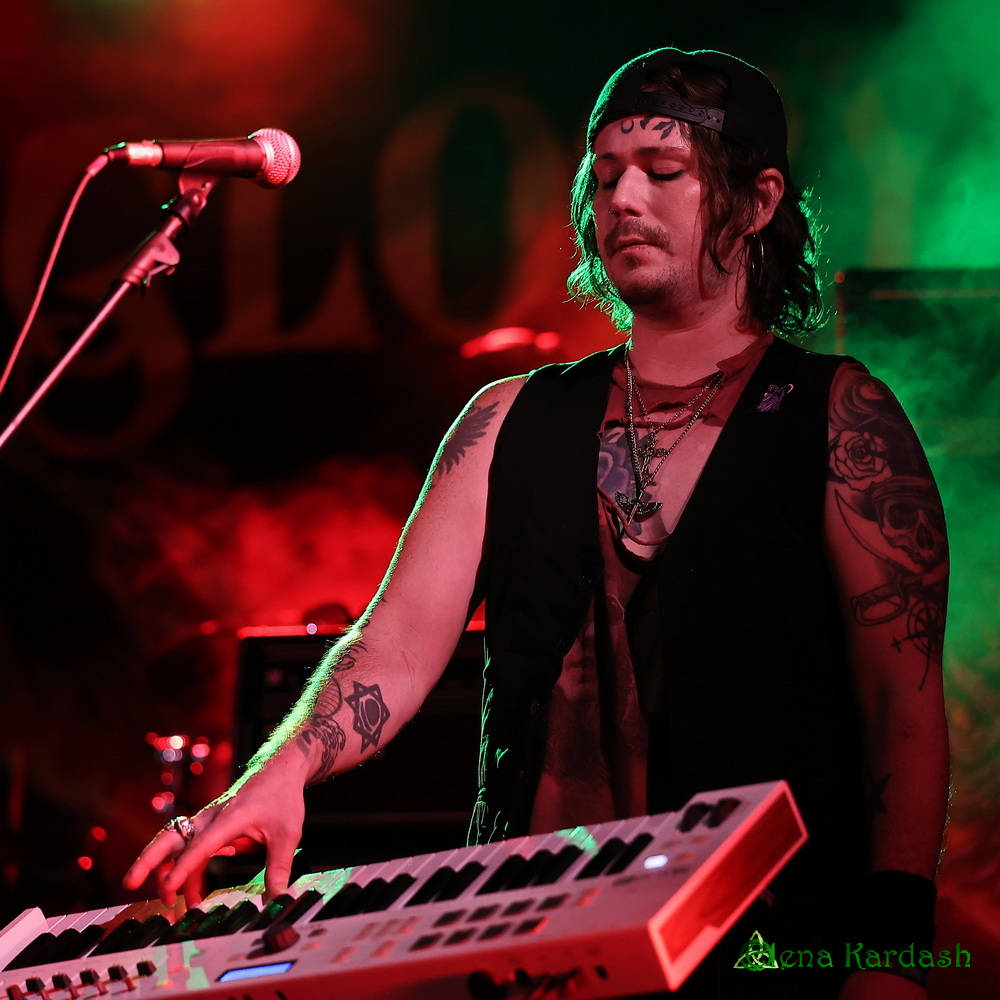
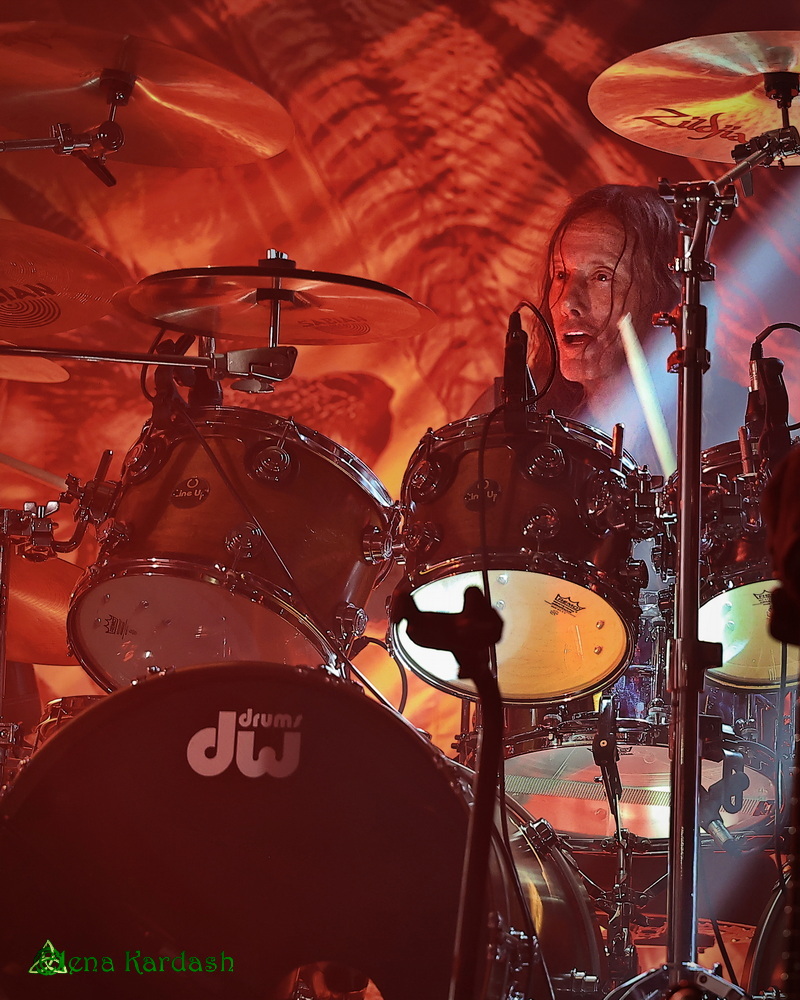
El motor encargado de sostener la velocidad y la complejidad neoclásica de la base rítmica desde la retaguardia de los parches fue el baterista fundador Dana Burnell. Esta sección mantuvo una gélida fijeza mental durante los exigentes patrones de “Pearls of Dust” y “Beyond The Unknown“, asegurando desde la retaguardia que el metrónomo avanzara sin fisuras. Su pegada milimétrica sobre la batería sirvió de anclaje perfecto para que el teclista John Pyres modulara las texturas de “Azrael“. Pyres, entregado por completo a la ejecución musical, deslizó los dedos sobre los sintetizadores para tejer los colchones de misterio que la audiencia asimiló de inmediato, consolidando la solidez instrumental del grupo.
La apoteosis y la comunión más real de toda la noche estalló en los compases de “Lost Reflection“. Durante el desarrollo del espectáculo, Travis Wills se dirigió directamente al público desde el micrófono para consultar si alguien entre la audiencia cumplía años ese mismo día. La respuesta de las primeras filas fue inmediata, respondiendo con los puños en alto ante el gesto del vocalista. Esta interacción estrechó la comunicación entre la formación norteamericana y el público portuario, manteniendo la intensidad del directo en un nivel óptimo antes de encarar el tramo final de su repertorio. Con el público totalmente entregado y el pulso del festival a tope de vatios, la banda arremetió con la carga final de “Lonely” y el cierre definitivo de “Red Sharks”, sellando un registro de categoria internacional basado en la autenticidad y el respeto mutuo entre la armada de Florida y su gente en Santurtzi.
EVIL SEEDS
Encargados de cerrar el cartel del día 1 del Kabiefest, los vizcaínos Evil Seeds ofrecieron una descarga arraigada en el sonido clásico y denso del metal pesado tradicional. El directo de la banda se estructuró sobre una coordinación instrumental rigurosa, donde el contacto constante con la masa del puerto definió una dinámica enérgica, cruda y centrada estrictamente en la identidad de sus músicos y la respuesta de su audiencia.
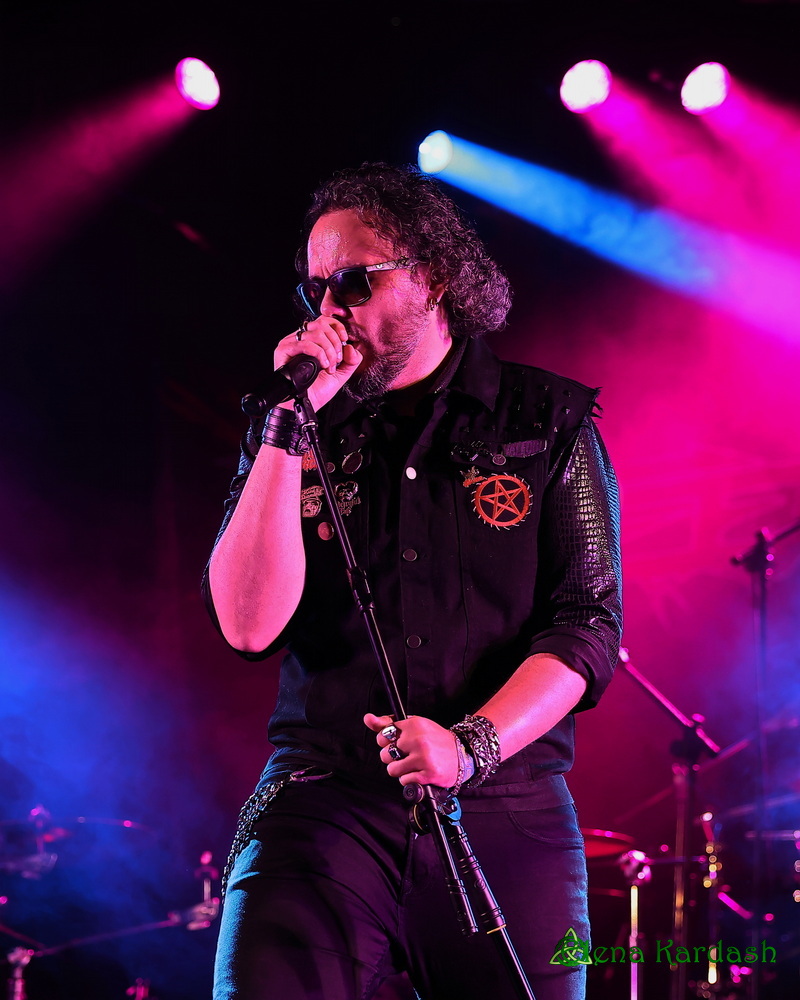
El asalto sonoro comenzó con la descarga de Intro y la ejecución directa de “King of the ring”, composición que fijó las bases rítmicas sobre el escenario. Al concluir el tema con un final abierto cargado de ruido instrumental, el vocalista Tami (Roma), se dirigió a las primeras filas del puerto con un breve discurso que conectó de inmediato con el público. La intensidad aumentó de forma fluida cuando el guitarrista Josu atacó el riff principal de “To hell with it all”, arrastrando a la audiencia a una dinámica de movimiento constante que cerró también con un final libre.
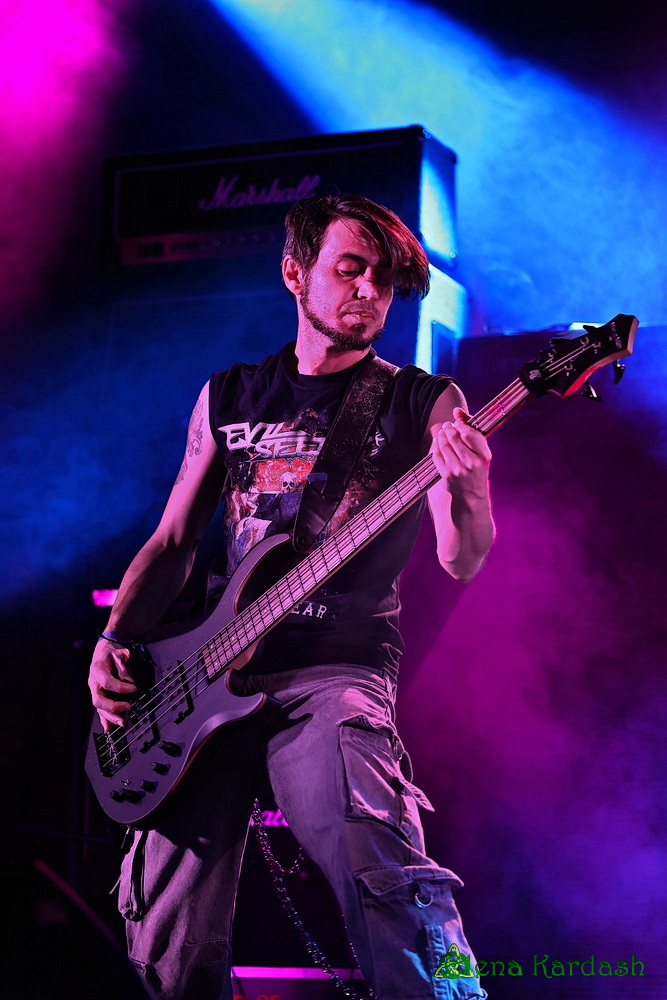
La solidez técnica del grupo se reforzó en las transiciones coordinadas de “Worst Plague Must Die”, introducida de forma conjunta por las guitarras de Josu e Iñaki, dando paso a la estructura lineal de “Theory of fear”, que comenzó con el ataque del guitarrista solista Iñaki. La comunicación directa con el público alcanzó un punto álgido durante la interpretación de “Living after midnight”, resuelta con una potente secuencia de tres estribillos entrelazados entre las voces y los solos de guitarra. Al concluir bajo una atmósfera de distorsión controlada, Roma tomó de nuevo el micrófono para respaldar la entrega de la banda sobre las tablas.
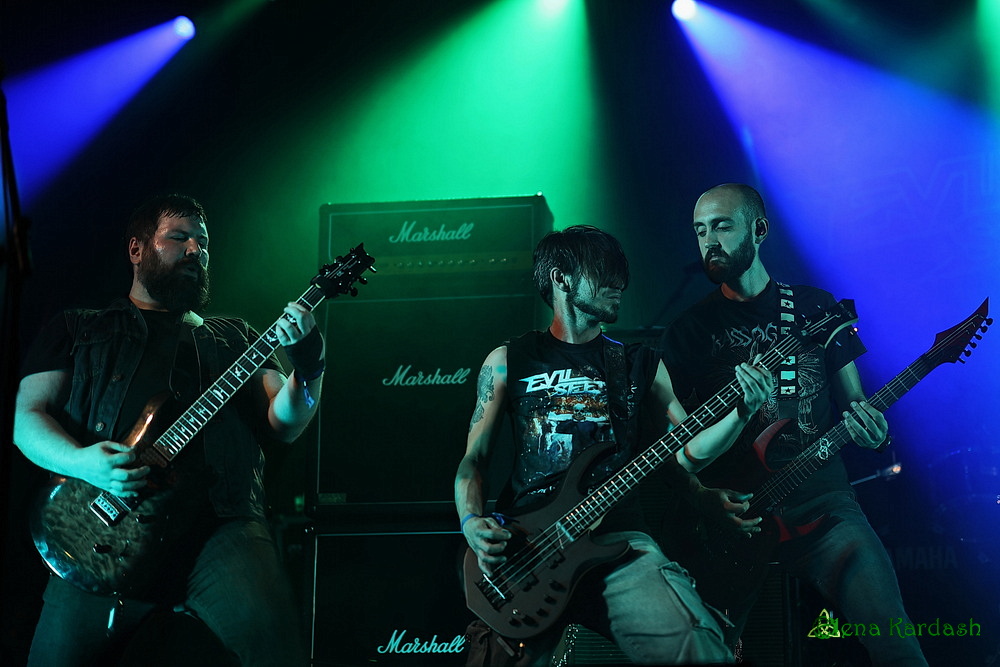
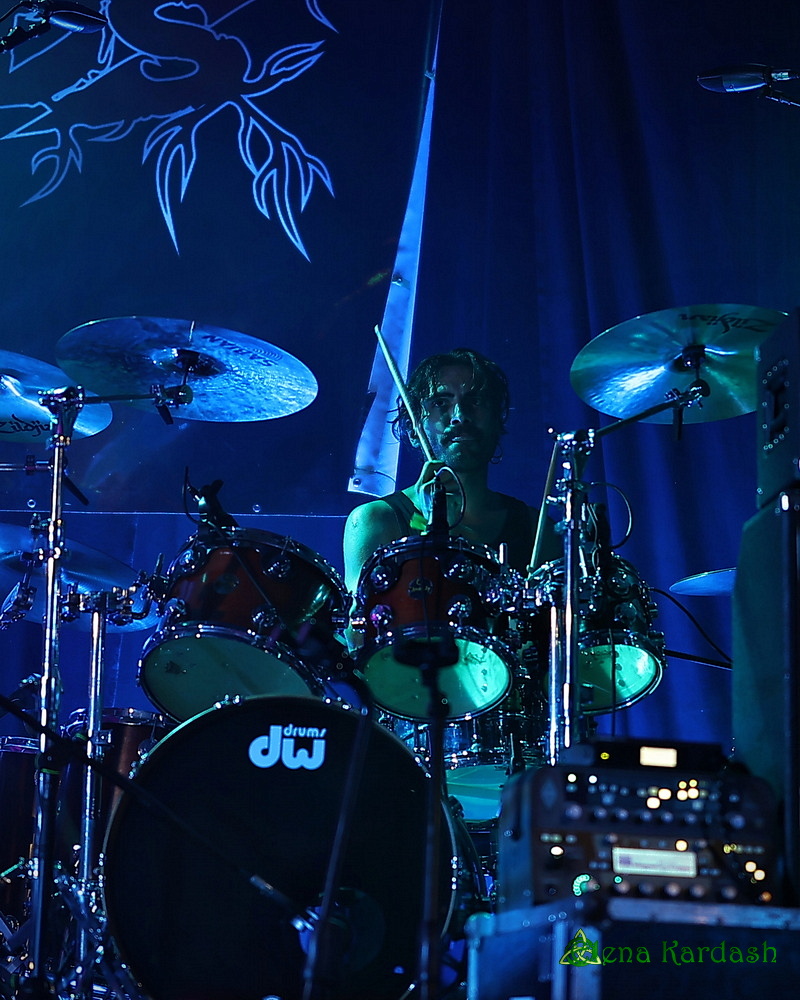
Este bloque abrió paso a un intermedio rítmico dominado por el solo de bajo de Diego Sáiz “Sephi“, un espacio donde las frecuencias graves asumieron el control absoluto mientras en la retaguardia el baterista Ander Pity, al mando de los parches, clavaba la mirada en el público para fijar el metrónomo. La transición hacia “Inside the Viper´s Nest” fue perfecta, guiada por las notas del bajo de Sephi, que marcaron con precisión junto a Ander el inicio exacto del tema.
El tramo final del repertorio consolidó la unión entre la banda y la audiencia. Durante los compases de “Against All Gods“, Roma pronunció un discurso que el público acompañó cantando a pleno pulmón, enlazando directamente con la introducción limpia de “Stronger“. La ejecución de este himno incluyó un parón técnico suspendido justo antes del último bloque lírico, resolviéndose con un triple estribillo que dejó las guitarras acopladas. El clímax definitivo llegó con “Mouth for war“, precedido por una última intervención de Roma demandando la energía de las primeras filas antes de arremeter con la velocidad de “Brutalizer“, cerrando el festival con un registro de autenticidad basado en el respeto mutuo entre los músicos y su gente.
Tras la descarga de Evil Seeds, la primera jornada del Kabiefest clausuró sus operaciones en el puerto de Santurtzi. El balance de este asalto al aire libre determinó el éxito de una propuesta respaldada por una sólida organización, un flujo constante de público y una producción técnica contundente. Con el escenario en silencio frente al mar, el festival detuvo su minutero con una respuesta unánime, dejando todo dispuesto para la segunda jornada.
12/06/2026 Kabiefest (Santurzi)
CRÓNICA Y FOTOGRAFÍAS: ELENA KARDASH
ENGLISH VERSION / VERSIÓN EN INGLÉS
REVIEW AND PHOTOGRAPHS: ELENA KARDASH
KABIEFEST – DAY 1
The opening day of Kabiefest at the Santurtzi port venue established itself as a strategic stronghold of international significance for both the heritage and vanguard of classic and contemporary metal. During this first assault, the Biscayan festival transformed into a high-voltage showcase, where the drive of the sharpest local acts stood shoulder-to-shoulder with international heavyweights of absolute value and proven track records on the global circuit. From the very beginning, the event dictated its own law through sovereign organizational stability, a massive crowd response, and a premium technical production engineered for the raw fidelity and weight of live sound, consecrating the harbor as the ultimate epicenter of metal activity in the region.
MS. MISSERY
Stage activity on the opening day kicked off with the performance of Ms. Missery. Founded in Portugalete in June 2022, the alternative rock-metal outfit defended their repertoire through a live set characterized by instrumental stability and a straightforward execution. The band’s performance relied on millimetric synchronicity on the boards, where the sharp communication between the musicians and a raw presence allowed them to quickly engage the front rows of the port venue, setting a solid precedent for the rest of the festival’s bill.
The progression of the performance, guided strictly by their repertoire sequence from the opening with “Hey Men, Amen!!” and “The Life You Live”, showed a compact band assaulting the stage head-on. As “The Navel Of The World” erupted, the rhythm section became the group’s true traction axis. Drummer José Antonio “Mogo” Mogollón commanded the tempo with an intense physical delivery, working hard with every strike on the snare with a heavy impact that infected the rest of the line. That heavy pulse was gathered with solid precision by guitarist Jonathan “Toci” Rodríguez during the transitions of “Get Out Alive” and “Vain Pride”; his execution of the solos reflected a state of absolute concentration, with eyes closed and his stance entirely surrendered to the vibration and sustain of the strings.
The central section of the live show, marked by the roar of “Do Extintion” and “The Urge“, consolidated the sound block of the band. Bassist Asier Castro assumed control of the rhythmic structure with a firm presence, projecting backing vocals with a precise physical response. This instrumental foundation was perfectly backed in “Things That Worth The Pain” and the recent single “Love Is Not A Gift” by the presence of guitarist Jon Ander “Nane” López, who, in addition to piloting the electronic programming, samples, and synthesizers, maintained a steady, fixed stance of absolute control, concentrating the voltage of the heavy rhythmics.
The climax and denouement of their performance arrived coupled with the final trilogy of “Holly Sinners, Wicked Saints“, the sonic tearing of “Battlefield“, and the ultimate acouple of “Be Here For Long”, where vocalist Ibon Sáez consummated the band’s delivery. His performance was an exercise in vocal demandand physical endurance, hands maintaining control of the microphone and his face reflecting the genuine effort of a live show. Ms. Missery signed off a solid opening performance, demonstrating the technical reliability of their musicians on the boards and leaving the benchmark at a high level.
RISE TO FALL
The presentation of Bilbao’s own Rise to Fall at Kabiefest exposed the maturity of a formation tightly cohesive in melodic death metal of the classical school, serving additionally as the ideal setting to commemorate the twentieth anniversary of the band’s foundation. Founded in 2006 in the Basque Country, the group stabilized the line-up that currently sustains its international projection in 2010, featuring Dalay Tarda (vocals), Hugo Markaida (guitar), Dann Hoyos (guitar), Xabier Del Val (drums), and Javier Martín (bass). Their career boasts premium milestones, such as their debut Restore The Balance (2010) released via Coroner Records, Defying The Gods (2012) – which led them on an intensive tour across Russia and Ukraine, End VS Beginning (2015) followed by an extensive tour in China, and Into Zero (2018). Their current status is highlighted by the release of their fifth studio album, The Fifth Dimension (2023), published under the Noble Demon label and backed by major tours throughout Europe and Japan during 2024. The band’s live set was built upon a precise human clockwork where technical rapport and visual communication defined a solid instrumental block, connecting directly with the port’s crowd without relying on docile stage gimmicks.
The concert’s kickoff established the baseline of this dynamic through the back-to-back physical delivery of “The Descendant” and “Ascend to the Throne,” compositions that instantly dictated the pace in the front rows. As “In the Wrong Hands” and “End vs Beginning” entered the fray, the instrumental intensity found its vessel in the execution of guitarist Dann Hoyos. His position on stage reflected a state of absolute interpretative focus; with eyes closed and his stance entirely surrendered to the technical development of the solo, Dann projected each melodic passage with a concentrated body language that the audience absorbed immediately, responding in unison to the progression of the harmonic lines in “Hierophant” and “The Compass.”
The true foundation of the group’s sonic weight was unveiled at the center of the stage through the synchronicity between bassist Javier Martín and guitarist Hugo Markaida during the bars of “…Kills the Reason” and “Inner Scream.” The rapport between both musicians translated into constant glances of control and smiles of complicity, proving the absolute safety of their rhythmic foundation. Javier Martín, from his position, and Hugo Markaida, punishing the fretboard at his side, actively rallied the festival’s front line, seeking direct eye contact and synchronizing their movements to incite the crowd’s motion just before injecting the heavy transitions of “Redrum” and “Infinite crossroad.”
The engine responsible for sustaining the speed and the metronome of this steamroller from the rear guard was drummer Xabier del Val. His work during the demanding patterns of “Test of time” and “Decoding reality” was an exercise in ice-cold mental focus, maintaining an unyielding posture and keeping his eyes locked onto his bandmates’ dynamics to ensure the rhythmic base advanced without a single fissure. His technical solidity served as the perfect anchor for the rest of the formation to maintain a fluid communicative flow with the audience.
The apotheosis and the climax of their performance arrived tied to the movements of “The Threshold” and “Thunders of Emotions Beating,” where vocalist Dalay Tarda assumed absolute control of the stage front. His performance was characterized by raw grit and genuine physical endurance, gripping the microphone and facing the pit with firm gestures that demanded the port’s response. The connection with the crowd reached its peak when the band halted the clock to execute “Blinded by Fear,” the legendary At The Gates cover, dedicated with professional honesty to the memory of the late vocalist Tomas Lindberg. A tribute that the audience received with fists raised high, sealing an international-class pedigree based on authenticity and mutual respect between the musicians and their people.
CRIMSON GLORY
The grand climax and main event of the first day of Kabiefest was driven by the performance of one of the most mystical and respected heavyweights of international progressive metal and the festival’s main headliner: America’s own Crimson Glory. Founded in Sarasota, Florida, in 1982 under the name Beowulf, the legendary outfit brought to the stage the heritage of a musical lineage that shaped history with complex neoclassical structures and currently defends its legacy through flawless synchronicity. Following the tragic loss of iconic vocalist Midnight in 2009 and a subsequent era fronted by Todd La Torre between 2010 and 2013, the band has returned with a revamped, destructive lineup led by the impressive vocals of Travis Wills. Their stage presentation was built upon a dense, genuinely dark instrumental delivery capable of connecting directly with the port’s crowd without relying on superficial stage gimmicks, proving why they remain living legends thanks to timeless cult masterpieces like their 1986 self-titled debut and the conceptual Transcendence (1988).
The opening of the live set immediately established the baseline of this dynamic through the consecutive physical delivery of “Where Dragon´s Rule” and the rhythmic bombardment of “Valhalla,” compositions that set the pace of the show and preheated the front rows before unleashing madness with “Dragon Lady.” Against the background shadows during the consecutive performance of “Hierophant” and “Angel in my Nightmare”, the frontman Travis Wills assumed control of the stage front with a solid vocal delivery and a sober stage presence that governed the live rhythm. Maintaining a commanding stance, Wills stepped forward to interact directly with the front rows of the pit, sustaining the intensity of the show while linking his vocal performance with “Redden the Sun”.
The true secret behind the American band’s sonic weight was unveiled at the center of the stage through the synchronicity of their string section during the performance of the iconic “Painted Skies.” Founding guitarist Ben Jackson and original bassist Jeff Lords, backed by the technical reliability of Mark “Borgy” Borgmeyer on the second guitar, intertwined their instrumental lines in a state of absolute musical connection on the boards. Founding bassist Jeff Lords assumed control of the low-end frequencies with flawless composure and technical integrity, sustaining the four-string lines as an authentic rhythmic stronghold on the boards. At his side, guitarist Ben Jackson executed his instrument’s lines with an untamable drive, concentrating the wattage of his heavy rhythmics and clean solos, binding the band’s classic heritage during the dynamic transitions toward “Lady of Winter” and “Masque of the Red Death.” The engine responsible for sustaining the speed and neoclassical complexity of the rhythm section from the rear guard was founding drummer Dana Burnell. This section maintained ice-cold mental focus during the demanding patterns of “Pearls of Dust” and “Beyond The Unknown,” ensuring from the rearguard that the metronome advanced without a single fissure. This millimetric drumming served as the perfect anchor for keyboardist John Pyres to modulate the textures of “Azrael.” Pyres, entirely surrendered to the musical execution, slid his fingers across the synthesizers to weave the layers of mystery that the audience instantly absorbed, consolidating the group’s instrumental stability.
The ultimate apotheosis and genuine communion of the night erupted during the bars of “Lost Reflection.” During the performance, Travis Wills addressed the crowd directly from the microphone to inquire if anyone in the audience was celebrating a birthday that day. The response from the front rows was immediate, answering with fists held high to the vocalist’s gesture. This interaction tightened the communication between the American outfit and the harbor crowd, maintaining the live show’s intensity at an optimal level before heading into the final stretch of their repertoire. With the audience entirely won over and the festival’s pulse at maximum wattage, the band lunged into the final charge of “Lonely” and the definitive closure of “Red Sharks,” sealing an international-class pedigree based on authenticity and mutual respect between the Florida armada and their people in Santurtzi.
EVIL SEEDS
In charge of closing the lineup for Day 1 of Kabiefest, local heavyweights Evil Seeds delivered a performance deeply rooted in the classic, dense sound of traditional heavy metal. The band’s live set was built upon a rigorous instrumental coordination, where constant contact with the port’s crowd defined an energetic, raw dynamic strictly focused on the identity of its musicians and the response of their audience.
The sonic assault began with the delivery of Intro and the direct execution of “King of the ring,” a composition that established the rhythmic foundations on stage. Upon concluding the track with an open finish loaded with instrumental noise, vocalist Tami (Roma), addressed the front rows with a brief speech that instantly connected with the audience. The intensity surged smoothly when guitarist Josu attacked the main riff of “To Hell with it All,” pulling the crowd into a dynamic of constant movement that also concluded with a free-form ending.
The group’s technical solidity was reinforced during the coordinated transitions of “Worst Plague Must Die,” jointly introduced by the guitars of Josu and Iñaki, leading directly into the linear structure of “Theory of Fear,” which kicked off with an attack by lead guitarist Iñaki. Communication with the audience reached a high point during the performance of “Living After Midnight,” resolved with a powerful sequence of three choruses intertwined between vocals and guitar solos. Concluding under an atmosphere of controlled distortion, Roma took the microphone once again to back the band’s fierce delivery on stage.
This block cleared the way for a rhythmic interlude dominated by Diego Sáiz “Sephi’s” bass solo, a space where low frequencies took absolute control while in the background drummer Ander Pity, commanding the gear from his seat, locked his eyes on the crowd to anchor the metronome. The transition into “Inside the Viper’s Nest” was flawless, guided by the notes of Sephi’s bass, which precisely signaled the exact start of the track alongside Ander.
The final stretch of the repertoire consolidated the bond between the band and the audience. During the bars of “Against All Gods,” Roma delivered a speech that the crowd accompanied by singing at the top of their lungs, linking directly with the clean introduction of “Stronger.” The execution of this anthem included a technical pause suspended just before the final lyrical block, resolving with a triple chorus that left the guitars feedbacking together. The ultimate climax arrived with “Mouth for War,” preceded by a final intervention from Roma demanding the energy of the front rows before lunging into the speed of “Brutalizer,” closing the lineup acts with a stamp of authenticity based on mutual respect between the musicians and their people.
Following Evil Seeds’ performance, the opening day of Kabiefest concluded its operations at the Santurtzi port. The balance of this open-air assault confirmed the success of an initiative backed by solid organization, a consistent crowd, and a powerful technical production. With the stage in silence facing the sea, the festival halted its clock with a unanimous response, leaving everything set for the second day.


Lo siento, debes estar conectado para publicar un comentario.